Skip to content


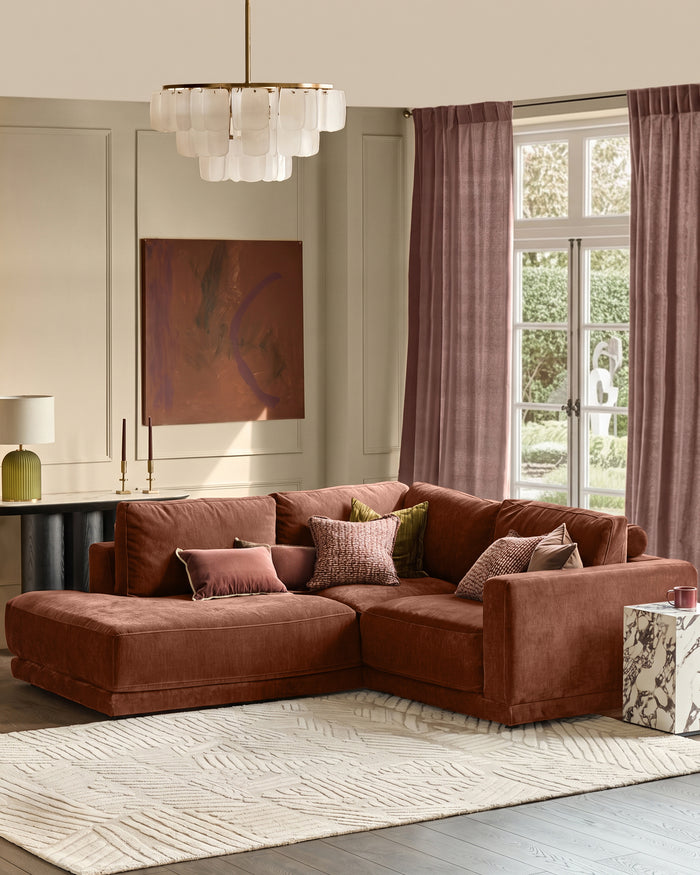
After years of earthy terracotta and rich rust tones shaping our interiors, a softer shade is beginning to take their place: apricot.
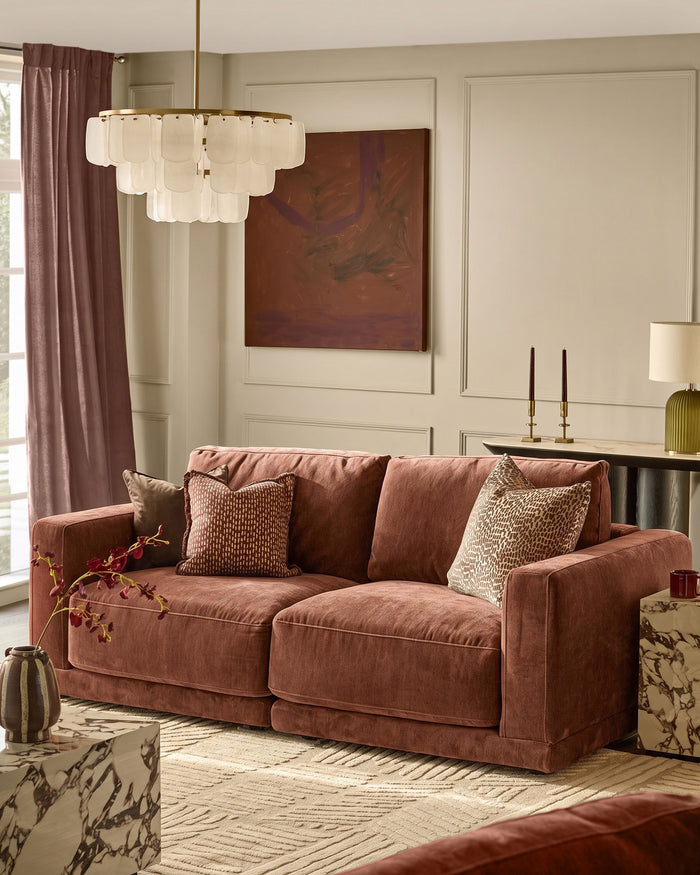
Warm without feeling overpowering, apricot sits somewhere between peach, terracotta and a soft earthy neutral. It brings colour into a room while retaining the versatility we usually associate with beige, taupe and stone – making it surprisingly easy to live with.
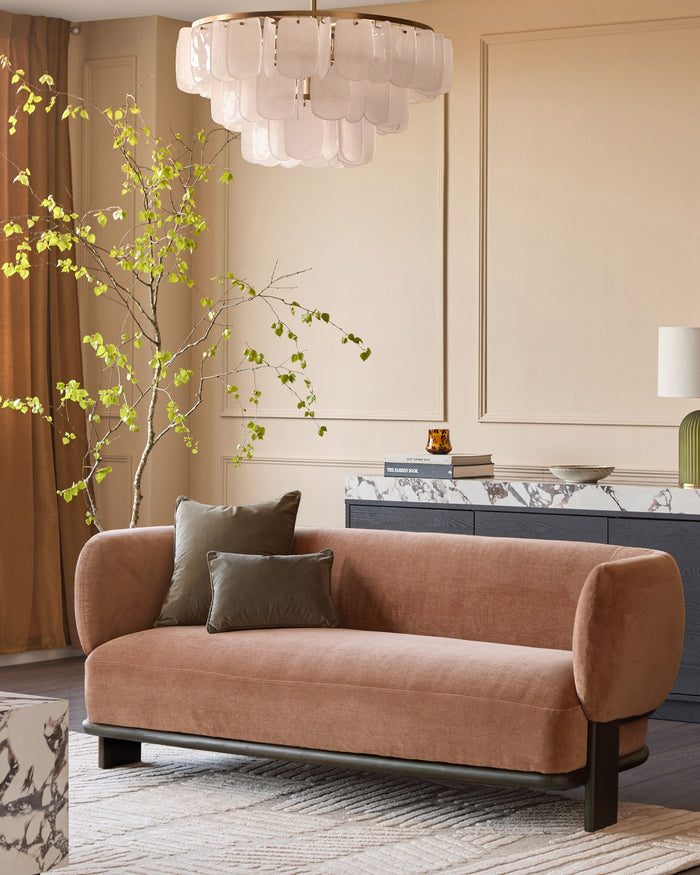
For AW26, we're seeing apricot paired with deeper, more grounded shades such as cocoa, oxblood, fig and dark olive, alongside natural materials including dark wood, ceramic and stone. The result feels warm and expressive but still considered.
So, why is apricot emerging now – and how can you make it work in your own home?
What This Guide Covers
- Why apricot is becoming an interior design trend
- The difference between apricot and terracotta
- Why we're treating apricot as a warm neutral
- The best colours to pair with apricot
- Which woods and materials work with apricot
- How texture changes the way apricot feels
- How to introduce apricot furniture into your home
- Common apricot styling mistakes
- Frequently asked questions

Why Is Apricot Trending in Interiors?
Interior colour trends rarely appear in isolation. More often, one shade gradually evolves into another as the way we decorate our homes changes.
Apricot furniture feels like a natural progression from the terracotta and rust tones we've seen over the last few years. It retains their warmth and earthiness, but its softer undertones give it a fresher, lighter quality that's easier to introduce across larger areas.
It also reflects a wider shift towards interiors that feel warmer, more tactile and personal. Instead of relying exclusively on beige, cream and grey, we're seeing colour used to create warmth without overwhelming a space.
Buyer Insight: "Apricot feels like a natural progression from the terracotta and rust tones we've seen over the last few years. It's softer, fresher and much easier to live with."
Apricot vs Terracotta: What's the Difference?
Although they're closely related, apricot and terracotta create quite different effects in a room.
Terracotta tends to have deeper red, brown and burnt-orange undertones, giving it a rich, earthy quality. Apricot is softer and lighter, typically introducing more peach and muted orange tones.
Think of terracotta as grounded and rustic, while apricot feels lighter, fresher and a little more contemporary.
That subtle difference is what makes apricot particularly versatile across upholstered furniture. Where deeper terracotta can become a statement, apricot can be used across a sofa, bed or set of dining chairs without necessarily dominating the room.
Is Apricot the New Warm Neutral?
We think there's a strong case for it.
Neutrals don't necessarily need to be colourless. The reason shades such as beige, taupe and cream work so successfully is because they're easy to build a room around.
Apricot can perform a similar role.
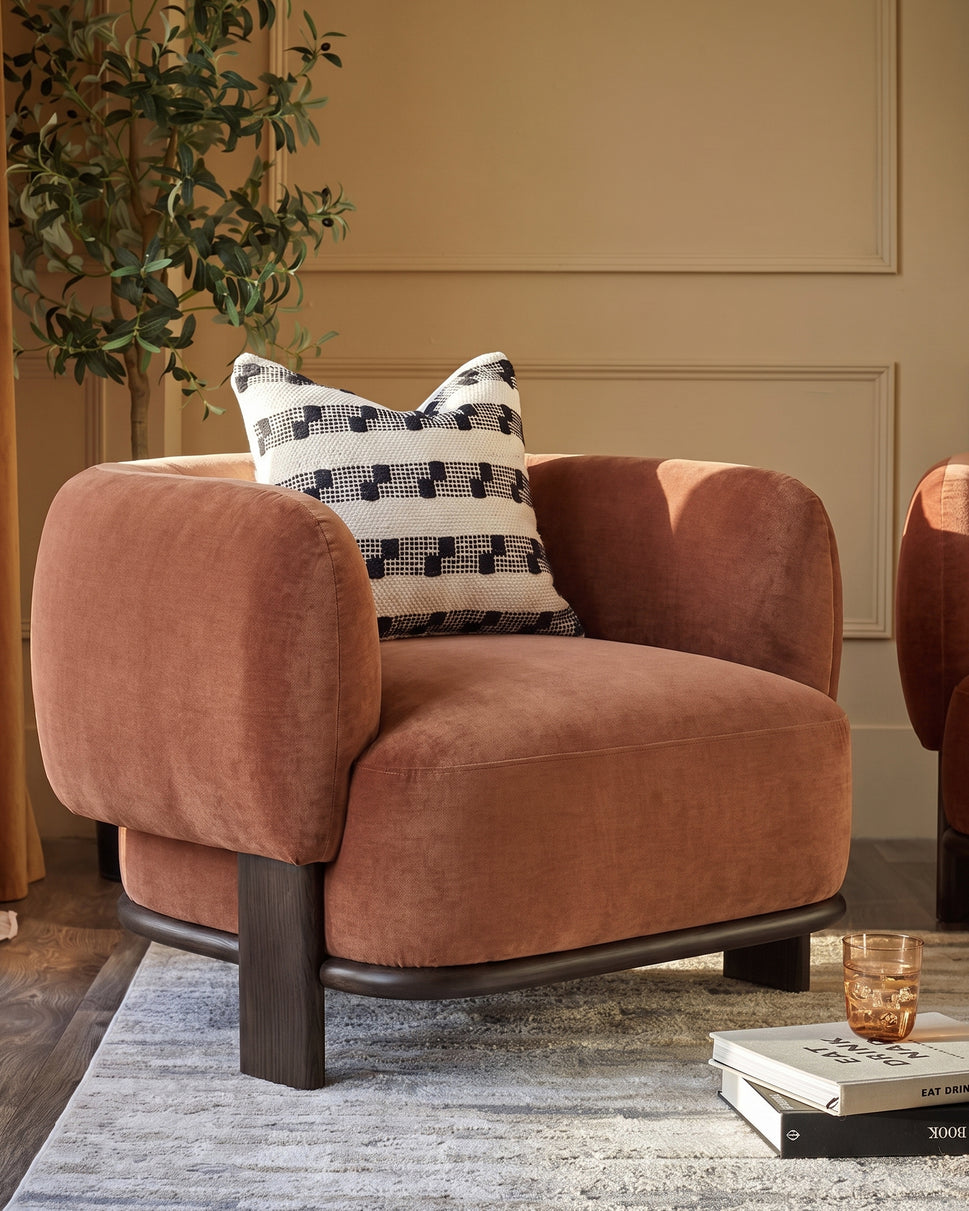
It has more personality than a traditional neutral, but its warmth allows it to sit comfortably alongside wood, stone, ceramic and softly textured fabrics. Used across a larger piece of furniture, it can create a warm foundation for the rest of the room rather than feeling like an accent colour that needs to be matched.
Buyer Insight: "I see it almost as a warm neutral. It has more personality than beige or taupe, but it can still work across larger pieces such as beds, sofas and dining chairs without overpowering a room."
This is perhaps the easiest way to approach the trend: don't think about how to add apricot to your room; think about what you can build around it.

What Colours Go With Apricot?
Apricot's warmth makes it surprisingly versatile, but contrast is what really brings the colour to life.
Rather than surrounding it with similar orange and peach shades, introduce deeper or more natural colours that give it definition.
Apricot and Chocolate Brown
Chocolate and cocoa tones bring depth to apricot and temper its sweeter side.
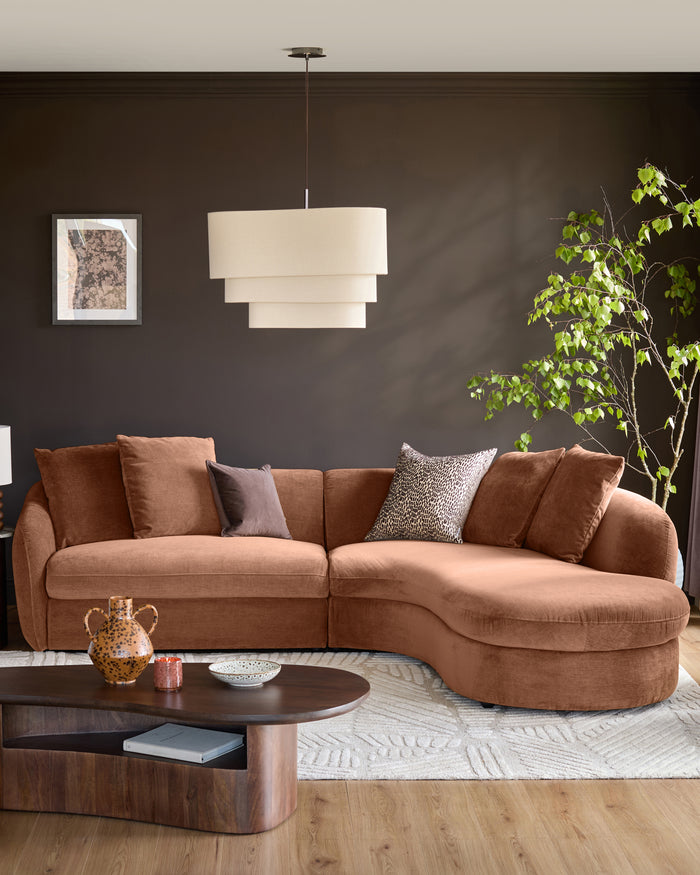
This combination works particularly well if you want a room to feel warm and sophisticated rather than overtly colourful. Dark brown accessories, furniture or wood finishes can anchor a larger apricot piece and create a more grounded palette.
Apricot and Oxblood Red
For something richer, pair apricot with oxblood or deep burgundy.
The red undertones connect the two shades, while the difference in depth creates contrast. Used sparingly through accessories or occasional furniture, oxblood gives a softer apricot scheme a more dramatic edge.
Apricot and Fig
Deep fig and plum tones offer a similarly rich contrast.
This is an especially effective pairing for tactile interiors, where apricot upholstery can sit alongside deeper velvet, textured fabric or statement accessories.
Apricot and Dark Olive
Apricot and olive balance one another beautifully.
The earthy green provides a cooler counterpoint to apricot's warmth while keeping the overall palette grounded in nature. It's a combination that works particularly well with stone, wood and organic textures.
Apricot and Black
Small amounts of black immediately give apricot a more architectural feel.
Black metal legs, lighting or accessories provide definition and help a softer colour palette feel distinctly contemporary.
Designer Tip: Avoid using too many closely related orange tones together. Apricot becomes much more interesting when contrasted with dark wood, olive, black or a warm metallic finish.
What Wood Goes With Apricot?
One of the easiest ways to change the character of apricot is through the wood you pair with it.
Apricot and Dark Walnut
Dark walnut is one of our favourite pairings.
The richness of the wood grounds apricot and creates contrast, stopping the colour from feeling overly sweet. It's particularly effective across dining furniture, where apricot upholstered chairs can soften the stronger architectural lines of a dark wood dining table.
Apricot and Chocolate-Toned Wood
Deep brown wood finishes create a similar effect, adding warmth without allowing the scheme to become too pale.
Combined with tactile apricot upholstery, the result feels rich, layered and grown-up.
Apricot and Oak
For something softer, choose oak.
The lighter natural grain brings out apricot's earthy qualities, creating a relaxed palette that works particularly well within contemporary, organic and Mediterranean-inspired interiors.
What Materials Pair Well With Apricot?
Colour is only half of the equation. Material can completely change the way apricot feels.
Our buyers particularly like pairing it with dark wood, ceramic, stone and brushed metal, creating contrast through both colour and texture.
Stone and Travertine
Warm stone and travertine emphasise apricot's softer, earthier qualities.
Their natural variation prevents the palette from feeling overly polished and works beautifully for interiors inspired by Mediterranean and organic design.

Ceramic
Ceramic brings a more contemporary edge.
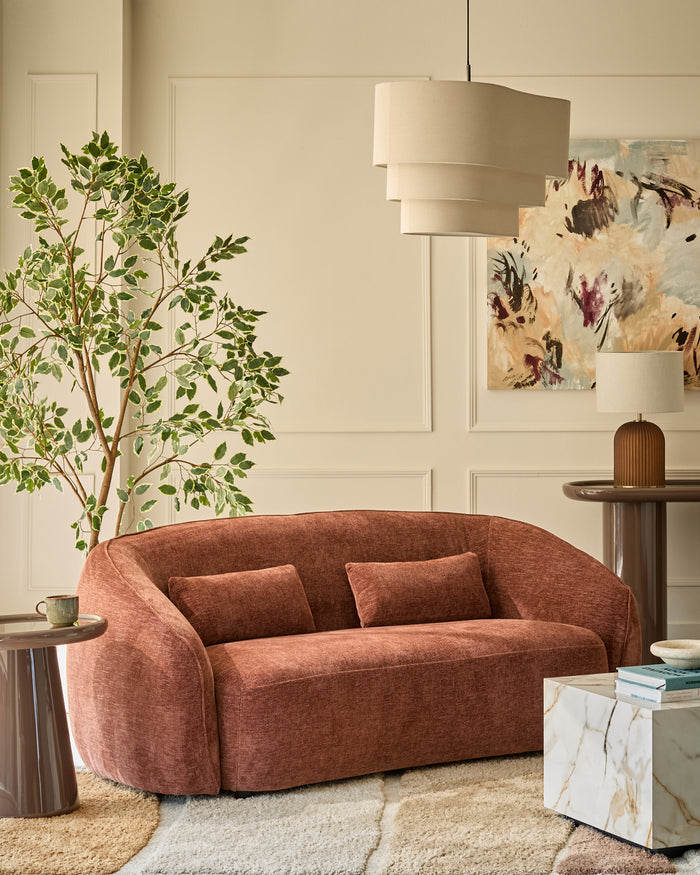
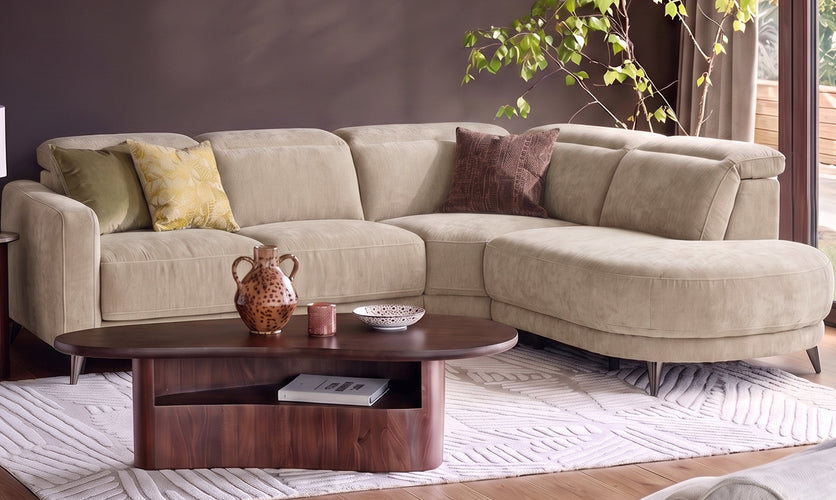
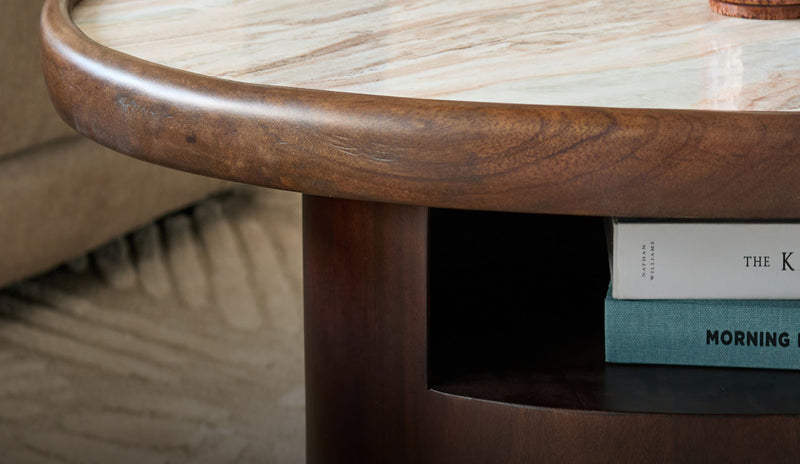
Against apricot upholstery, ceramic dining tables and occasional furniture provide a smooth, refined contrast to softer textiles. Our Russo natural gloss coffee table is a great option as the natural veining of this ceramic coffee table matches the tones of apricot, along with the contrast in textures of the materials.
Brushed Metal
Warm metallic finishes introduce just enough detail without competing with the colour.
For a more contemporary scheme, darker metal finishes can provide stronger contrast. The warm tones of the Estelle chandelier light with a brushed bronze frame compliment the warmth of apricot beautifully.
Soft Upholstery
This is where apricot really comes into its own.
Chenille, soft velvet and woven fabrics give the colour greater depth. Their tactile surfaces create subtle variations in tone as light moves across them, making apricot feel richer and more sophisticated.
Buyer Insight: "Material makes a big difference. Chenille, slubby weaves and soft velvets make apricot feel more tactile and grown-up."
How to Introduce Apricot Into Your Home
One of apricot's strengths is that you don't need to completely redesign a room to use it.
How much you introduce simply depends on how confident you feel with colour.
Start Small: Dining Chairs, Bar Stools and Occasional Chairs
If your home is predominantly neutral, seating is an easy place to begin.
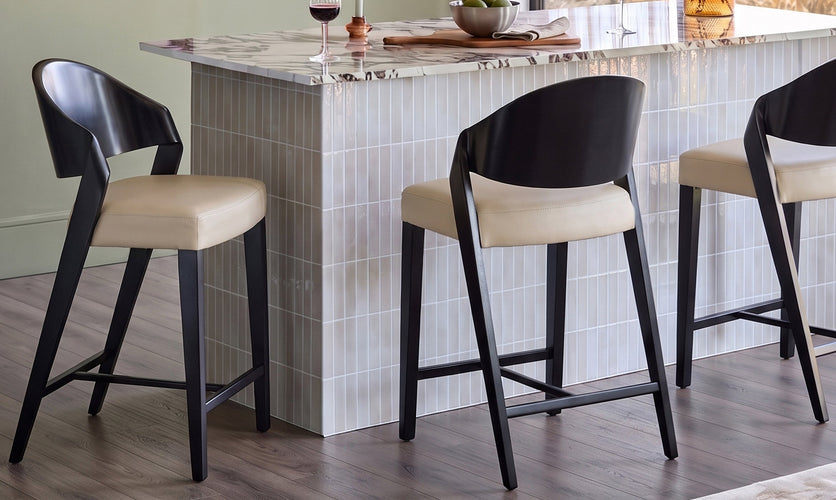
A pair of apricot bar stools can bring warmth to a kitchen without changing the entire scheme, while apricot dining chairs provide a subtle point of contrast around a wood or ceramic dining table.
An occasional chair works in much the same way in a living room or bedroom.
These smaller pieces allow apricot to become an accent rather than the foundation of the space.
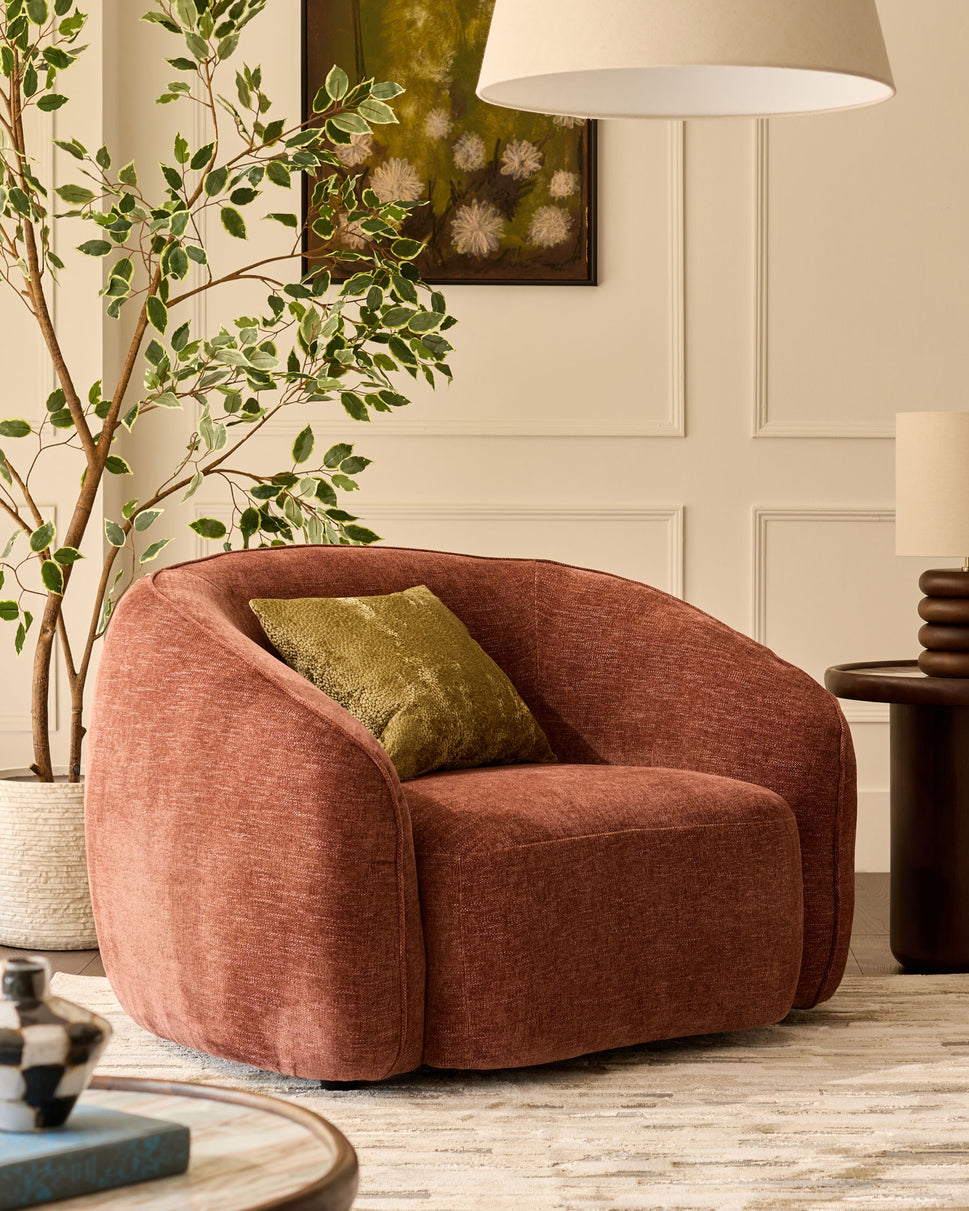
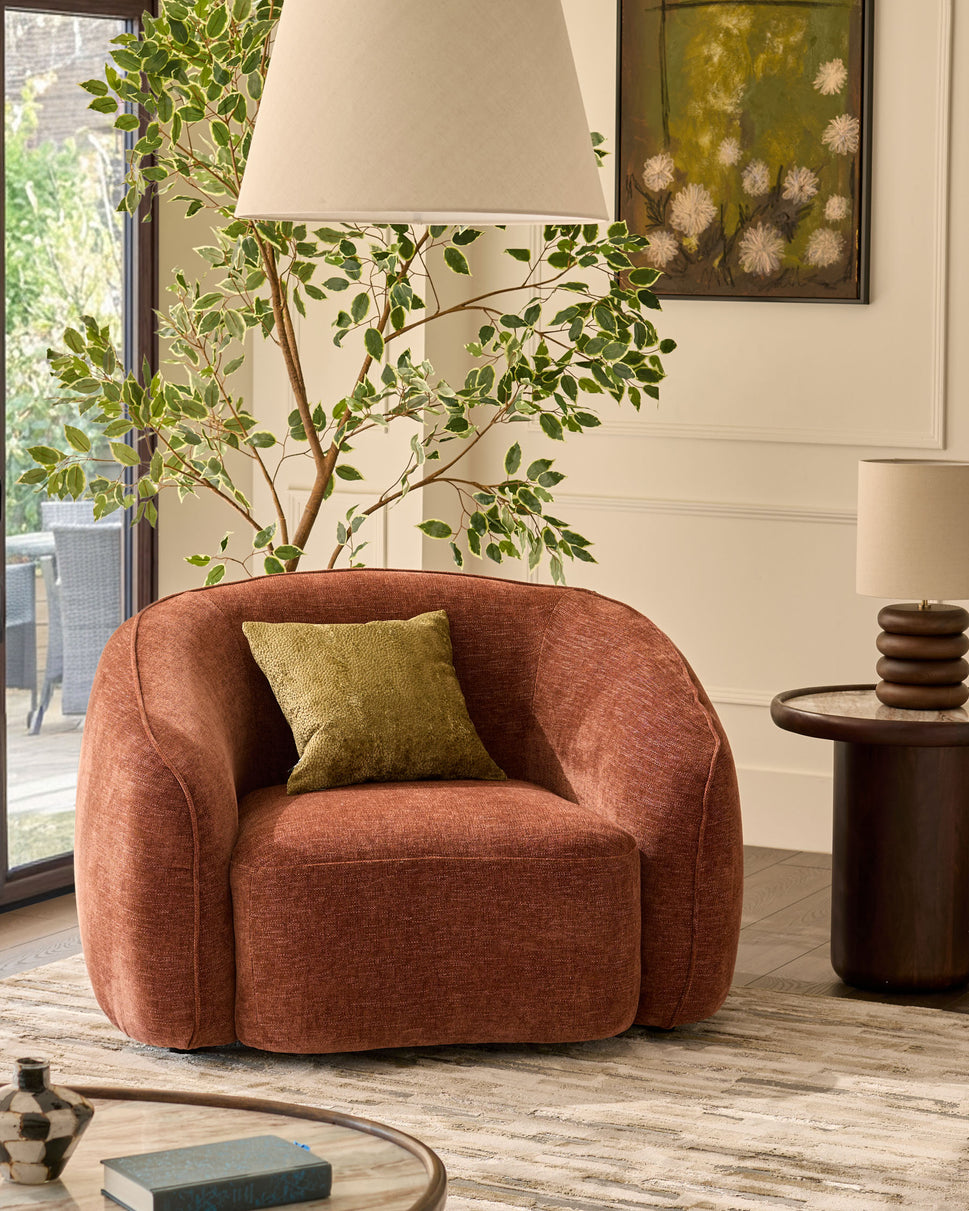
Take It Further: Dining Benches and Statement Seating
Once you're comfortable with the colour, larger upholstered pieces allow apricot to become more influential within the room.
A dining bench can introduce a broader block of colour while still being grounded by the dining table around it. Equally accent chairs can help bring a pop of colour whilst being paired with warm and neutral living room furniture.
Pairing it with dark wood or ceramic helps balance the softness.
Make It the Foundation: Apricot Sofas and Beds
Apricot doesn't have to be reserved for accent furniture.
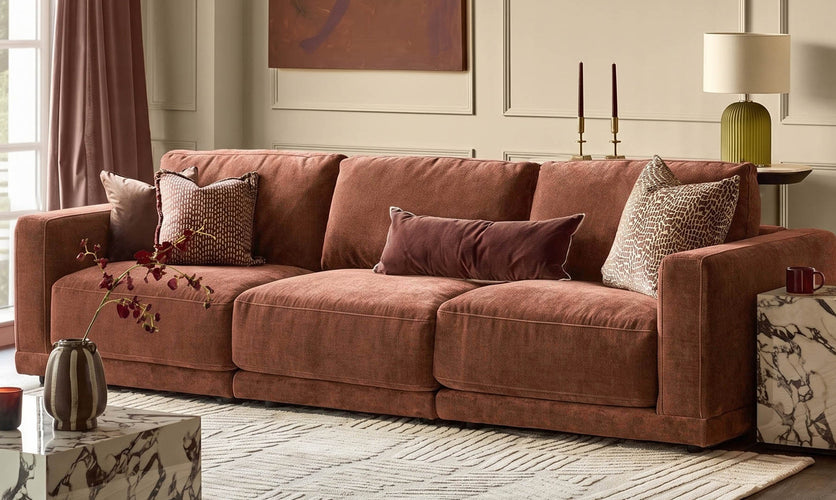
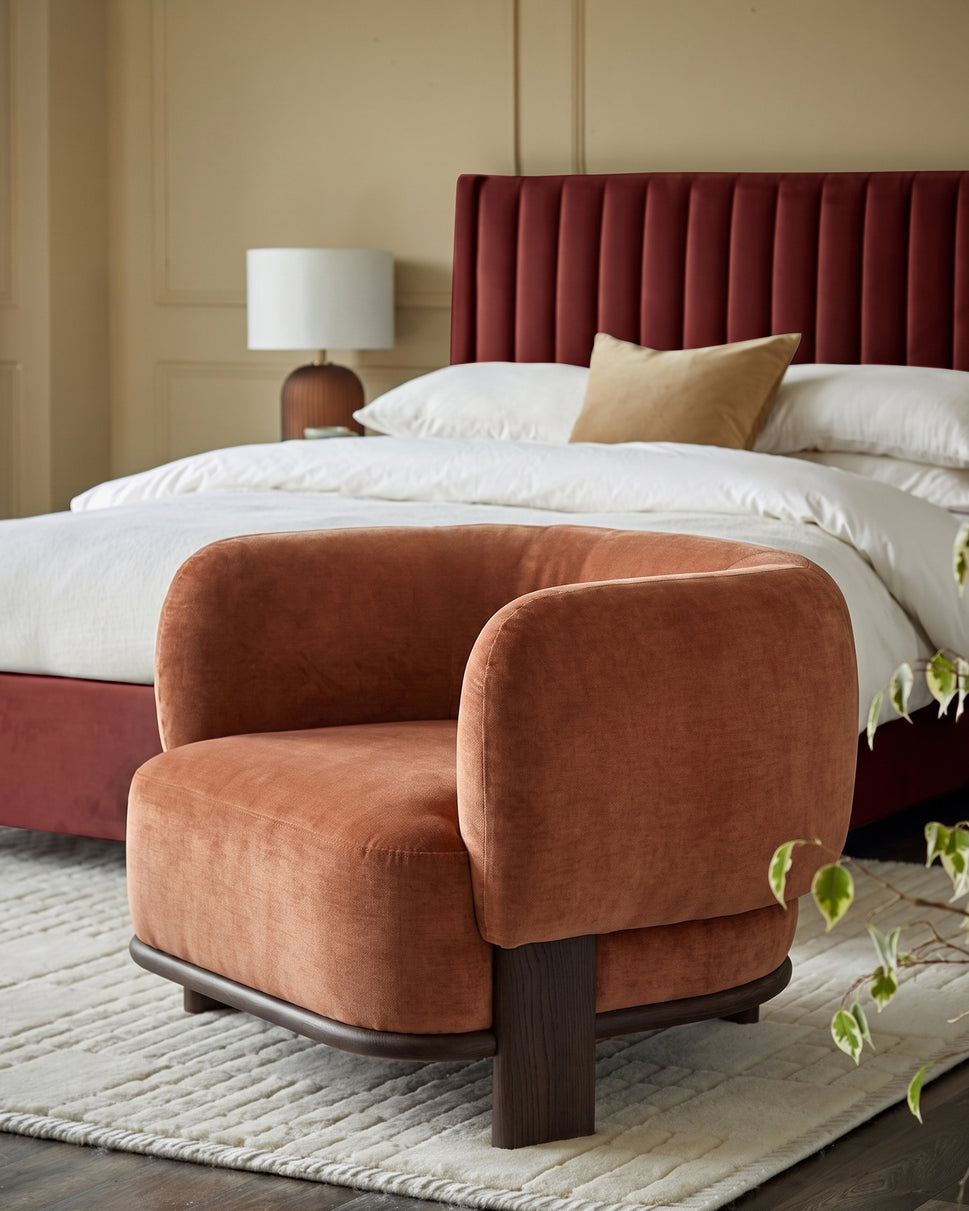
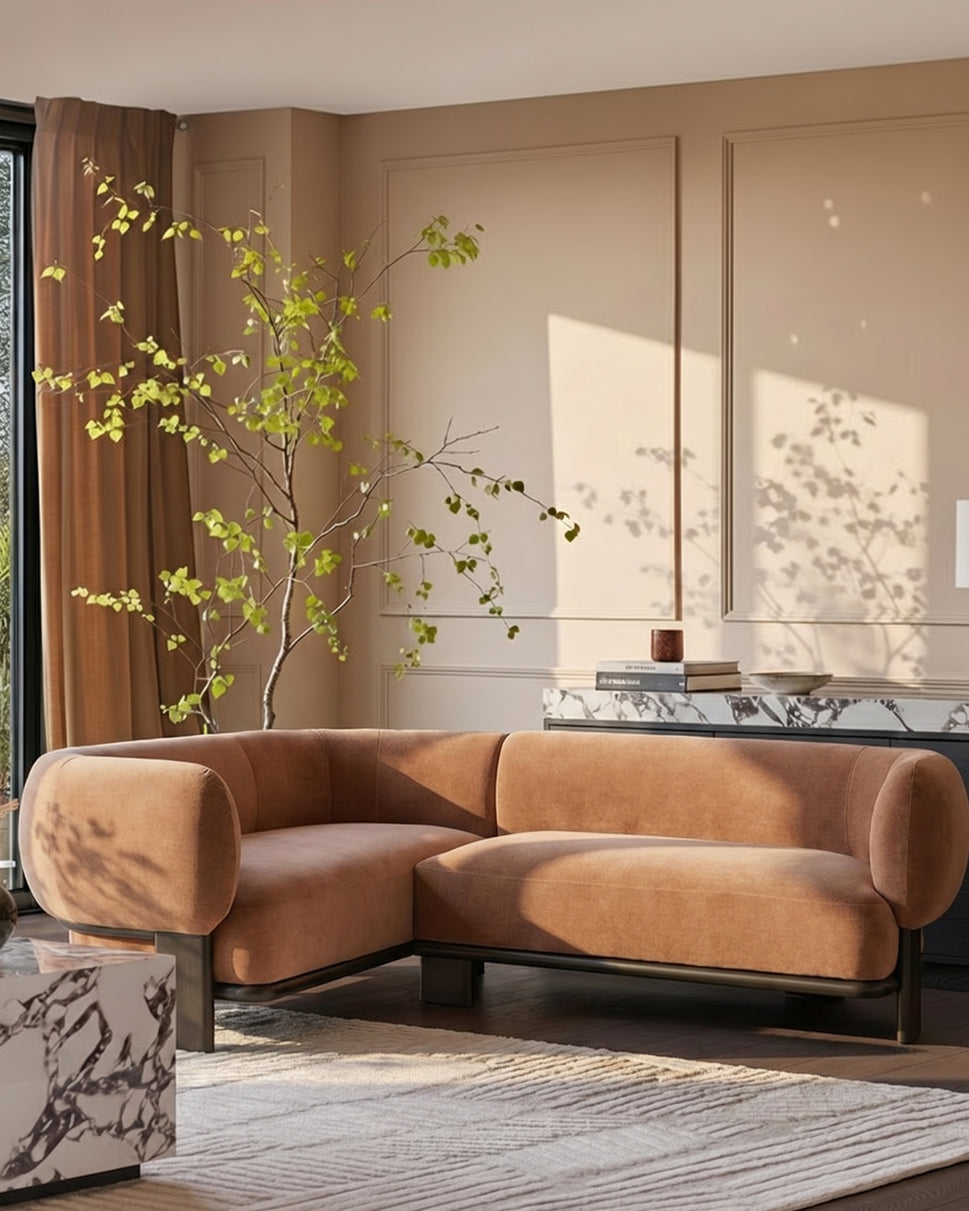
Its muted quality means it can work beautifully across larger pieces such as sofas and upholstered beds.
This is where treating apricot as a warm neutral becomes particularly useful.
Rather than trying to find other furniture that "matches" the apricot, build the room around it with cream, chocolate, dark wood, stone, olive and carefully chosen darker accents.
Which Rooms Work Best With Apricot?
Apricot is surprisingly easy to move throughout the home.
Dining Rooms
Use apricot dining chairs or a bench against dark wood or ceramic for a considered contrast between hard and soft materials.
Kitchens
Apricot bar stools introduce warmth without requiring permanent changes to cabinetry or surfaces.
Living Rooms
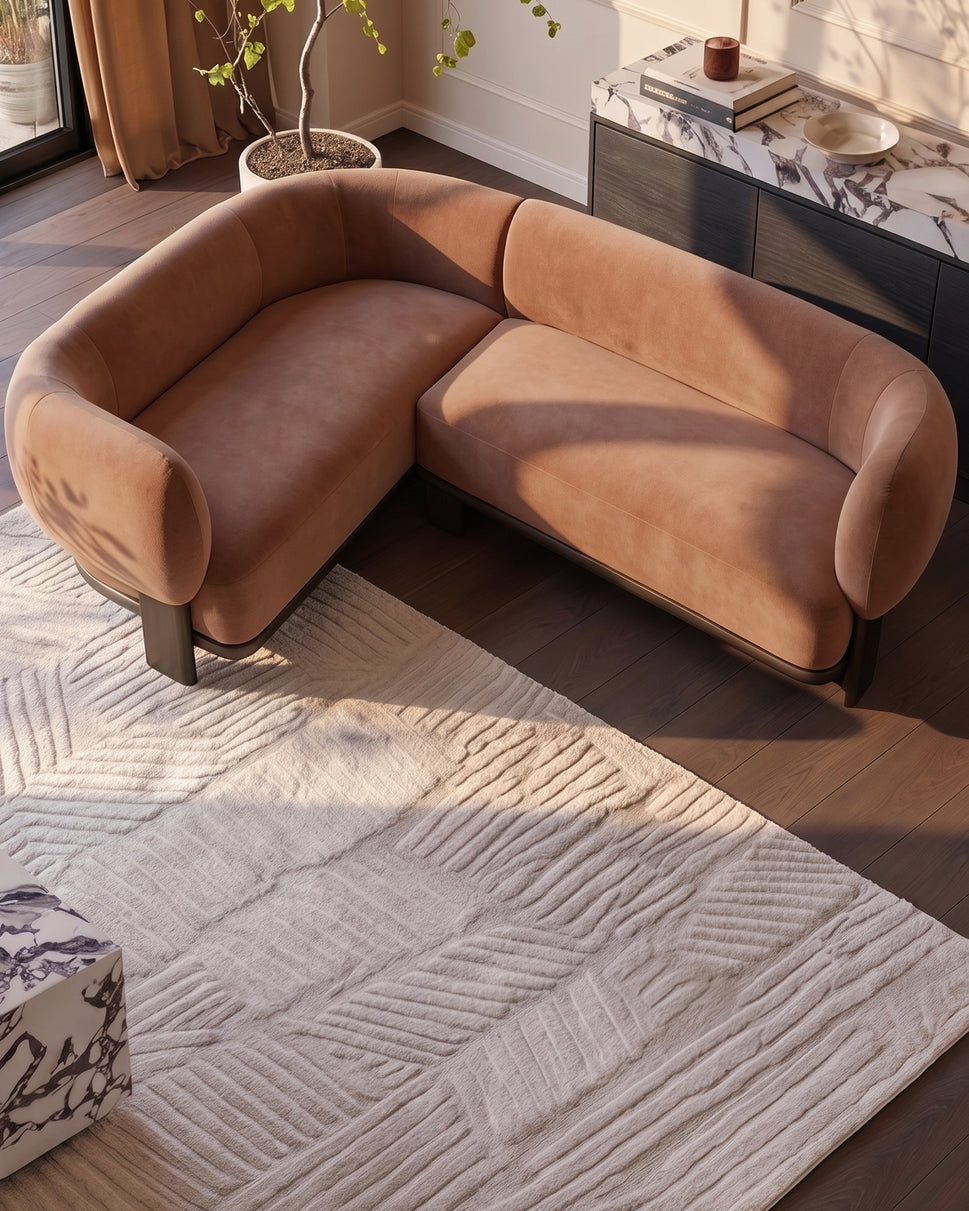
An apricot sofa can act as the room's warm neutral, surrounded by darker wood, stone, cream and richer accent colours.
Bedrooms
Upholstered beds are particularly suited to softer apricot tones. Paired with warm whites, dark bedside tables and tactile bedding, the result feels calm without becoming completely neutral.

Common Mistakes When Styling Apricot
The biggest mistake is assuming everything around apricot also needs to be warm and orange-toned.
Too many similar shades can make the colour lose definition.
Instead:
- Introduce darker colours to ground it.
- Mix soft upholstery with harder materials such as stone and ceramic.
- Use natural wood to bring out its earthy qualities.
- Add black or dark metal for a more contemporary look.
- Allow apricot to be the main warm colour rather than competing with several similar shades.
Contrast gives apricot room to breathe.
Our Design Perspective
What makes apricot particularly interesting to us isn't simply that it's a new colour.
It's how easily it works with the materials we naturally gravitate towards at Danetti: dark wood, ceramic, soft upholstery, stone and brushed metal.
It can soften the architectural quality of a ceramic dining table, bring warmth to dark wood or introduce colour into an otherwise neutral bedroom without demanding attention.
And that versatility is what gives apricot longevity beyond a single season.
Frequently Asked Questions
What colour is apricot?
Apricot is a warm shade that sits between peach, muted orange and soft terracotta. It's generally lighter and softer than traditional terracotta or rust.
What colours go with apricot furniture?
Apricot pairs particularly well with chocolate brown, cocoa, dark olive, oxblood, fig, warm white and black. Darker shades create contrast and help ground its warmth.
What wood goes with apricot?
Both light and dark woods work with apricot. Dark walnut and chocolate-toned woods create a richer, more sophisticated contrast, while oak gives apricot a softer, more organic feel.
Is apricot a neutral colour?
Technically, apricot is a colour rather than a traditional neutral. However, softer, muted apricot shades can be styled much like warm neutrals such as beige or taupe, particularly across upholstered furniture.
What's the difference between apricot and terracotta?
Terracotta generally contains deeper red, brown and burnt-orange tones. Apricot is softer, lighter and slightly peachier, giving it a fresher appearance that's easier to use across larger areas.
Does apricot go with green?
Yes. Dark olive is particularly effective because the green provides contrast while maintaining an earthy, natural palette.
Does apricot work with dark furniture?
Yes – and it's one of our favourite ways to style it. Dark walnut, chocolate brown, black and other deep finishes help ground apricot and stop it feeling overly sweet.
Final Thoughts
Apricot may have emerged from our love of terracotta and rust, but its softer character gives it a versatility all of its own.
It can bring personality to a neutral room, soften darker furniture or become the foundation for a richer palette of cocoa, oxblood, fig and olive. Paired with the right materials – from dark walnut and ceramic to travertine and tactile upholstery – it feels considered rather than trend-led.
For those ready to embrace it, an apricot sofa or upholstered bed can transform the character of a room. For those simply curious about colour, a dining chair, bar stool or occasional chair is an easy place to begin.
Either way, we think apricot's greatest strength is its ability to bring warmth into the home without asking everything else in the room to compete with it.
It's colour, just a little easier to live with.