Skip to content
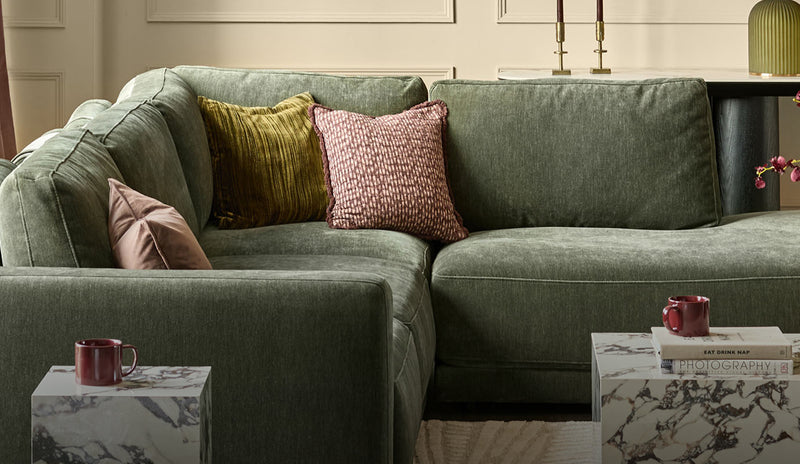


What’s better: a leather sofa or a fabric sofa? Ask any designer, search any blog, and you’ll find a different answer each time. But ‘better’ isn’t about a definitive answer, or even someone else’s opinion. It’s about what works best for you. So, to figure that out, we’ve put together a helpful handful of questions centred on:
- Purpose
- Comfort
- Maintenance
- Style
- Value
As you answer, you’ll be one step closer to picking the right sofa material for you – and finding the perfect sofa for your home.
Leather vs Fabric Sofas
Purpose
The simplest, yet most important factor when choosing a sofa is its purpose. Be sure of the context your sofa will sit in before anything else.
Ask yourself:
- Where will it go?
This might be your living room, your bedroom, or your dressing room. It could even be a guesthouse or granny annex. Pick the spot – and don’t forget to measure up.
- Who will use it?
The number of people piling onto your sofa is incredibly important. Is it just you? Or your family too? What about guests? Pets? Anyone else?
- When will it be used?
Is this a hardworking everyday piece? Or a ‘hardly ever sat in’ sort of sofa?
- How will it be used?
Sitting is obvious. But will you want to put your feet up? Lean back a little? Will any little ones be climbing over it?
Once you’re clear on these, you can start choosing between leather or fabric upholstery.

Comfort
Although what’s on the inside - frames, springs, cushions - matters just as much as what’s on the outside. So, to keep things simpler, let’s focus on the power of your sofa’s material itself for now.
And on the whole, fabric is considered to be comfier than leather, largely due to temperature.
Outside temperatures affect leather more than fabric. When it’s warm, it absorbs heat faster, and can become hot and sticky to sit on – and if you’re planning to sit on your sofa every day, that might be a little annoying. It can also be uncomfortably chilly in the colder months too, so if you’re curating a cosy space for it to sit in, it may not be as snug as a fabric alternative. But if you’re not phased or won’t be using it too often to mind, you can always accessorise your leather sofa with soft finishes like fabric throws and cushions.
You also don’t know until you try. Comfort can be swayed by how fabric feels to your touch, and a buttery leather sofa might be just right. Or, it could be a luxurious chenille, soft velvet, or tactile cotton blend that beckons you to sit and relax. We always recommend ordering fabric swatches to get a feel for your sofa before you commit.
Maintenance
Whether fabric or leather, a sofa is an investment piece and a real statement of your home. If it’s being used in a secondary living space or even a bedroom, durability won’t be too big a factor. But most often, it needs to be hard wearing, easy to maintain, and in beautiful condition for as long as you love it.
Leather is, by its nature, more durable than fabric. It’s why boots and trainers tend to be made of it. As leather ages, it can become faded or wrinkled, and that can add to the charm and story of the piece. It’s also easy to clean and can last at least five years longer than a fabric sofa – but that does depend on the fabric you choose.
Although more susceptible to tears, spillages and dust, fabric sofas can come with special treatments to keep them long-wearing. You just might have to be a little more careful around them. They also come in more of a variety of tones and textures, so it can be easier to adapt to the design of the room you’re curating – but more on style in a moment.
As a rule, remember: for high-traffic areas, choose leather or durable fabrics that measure up to it. For spaces used less often, feel free to use more delicate fabrics like velvet, which should be safe out of harm.

Style
Finally, style. Do you like how it looks? This comes down to personal taste, so let’s explore the effect that different materials can create.
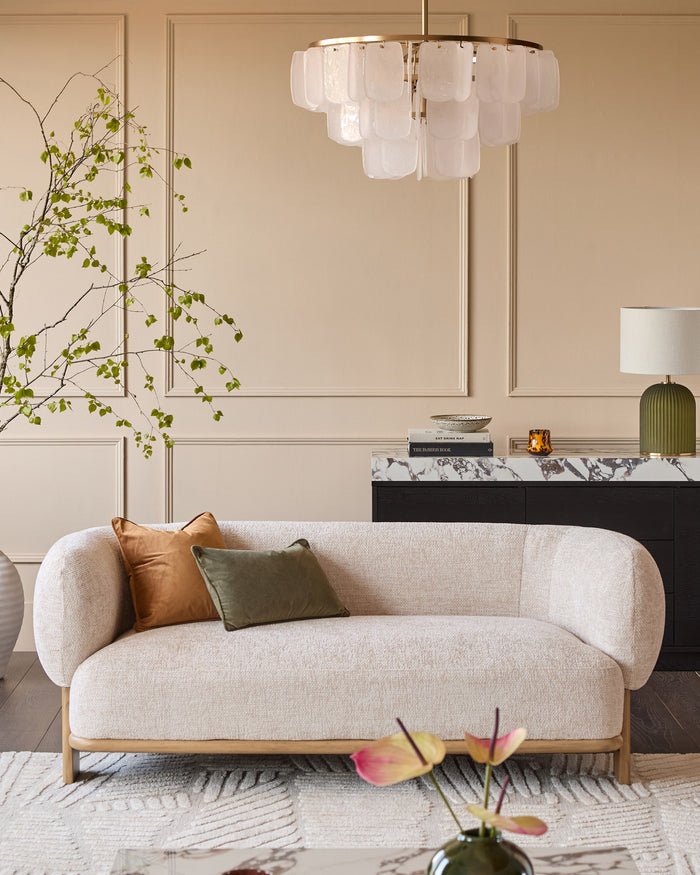
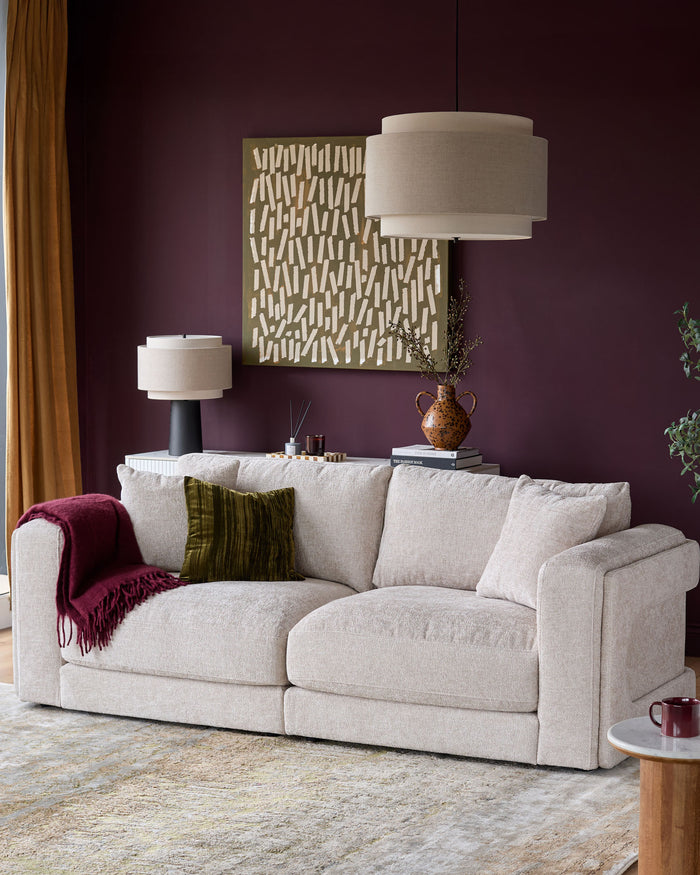
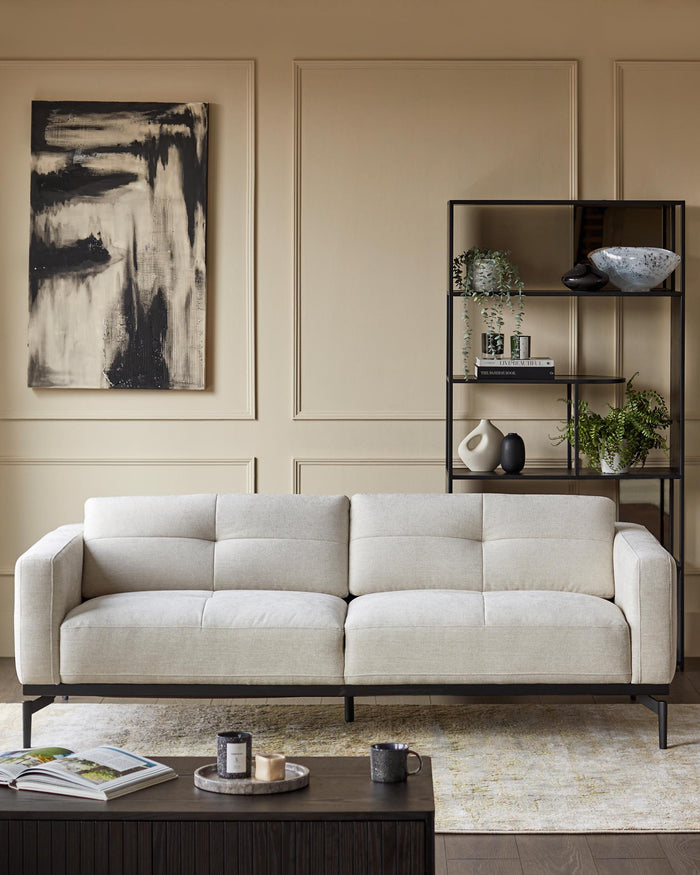
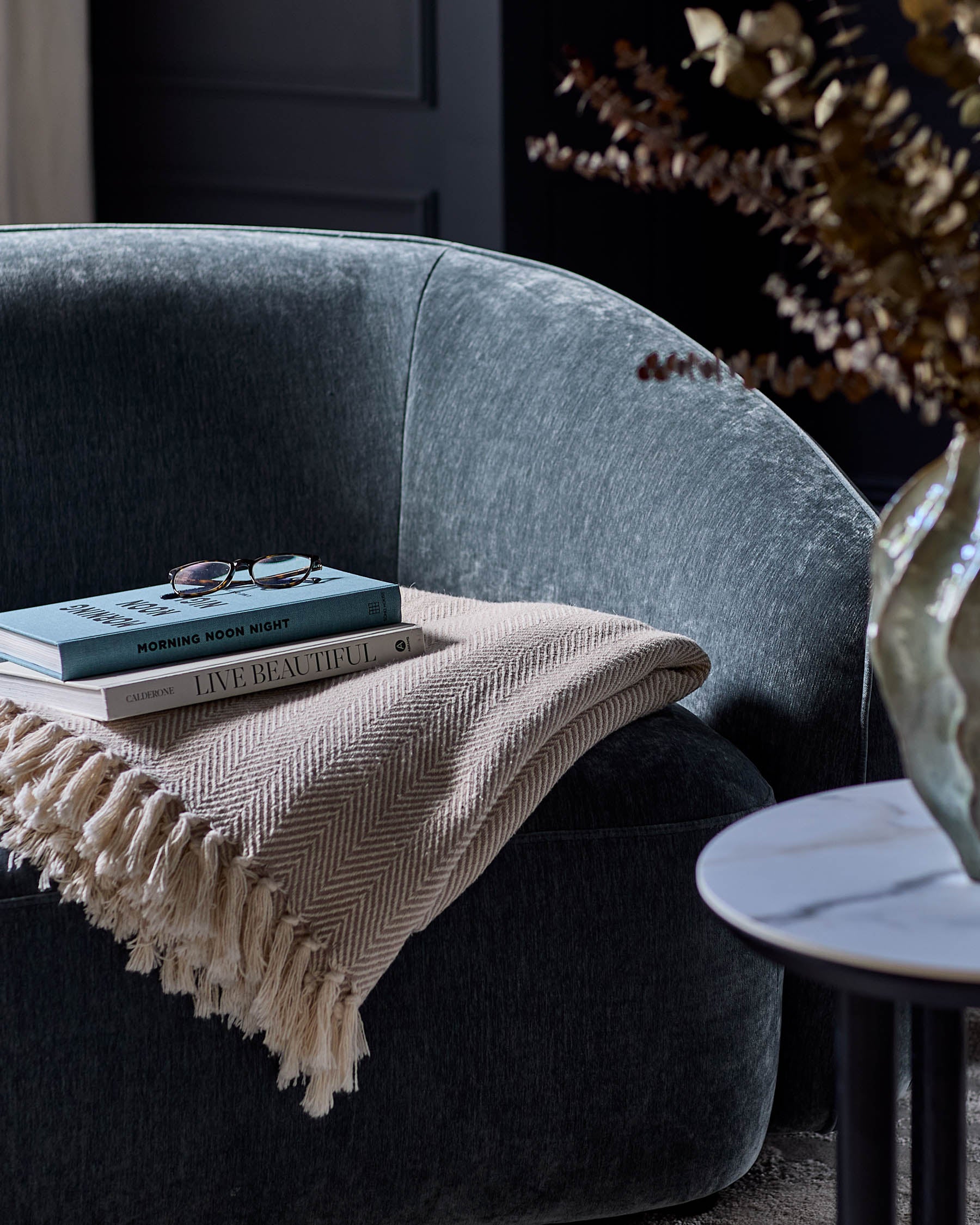
Leather sofas make a true statement, setting a timeless, sophisticated tone to a room. Velvet is rich and luxurious, adding to more glamorous spaces. Chenille adds softness, ideal for cosy spaces. And cotton, or cotton blends, are understated and neutral, adapting to the room it sits in with natural charm. There are plenty of other fabrics, but these are the main ones you’ll find upholstering sofas.
Don’t forget to consider colour. Colour can dramatically influence the look of your space. The neutral tans, browns, blacks, greys and creams found in leather are versatile, timeless, and often also found in fabrics like cotton and linen. But if you’re looking for a bolder colour, usually paired with statement materials like velvet and chenille, a fabric sofa could be a better choice.
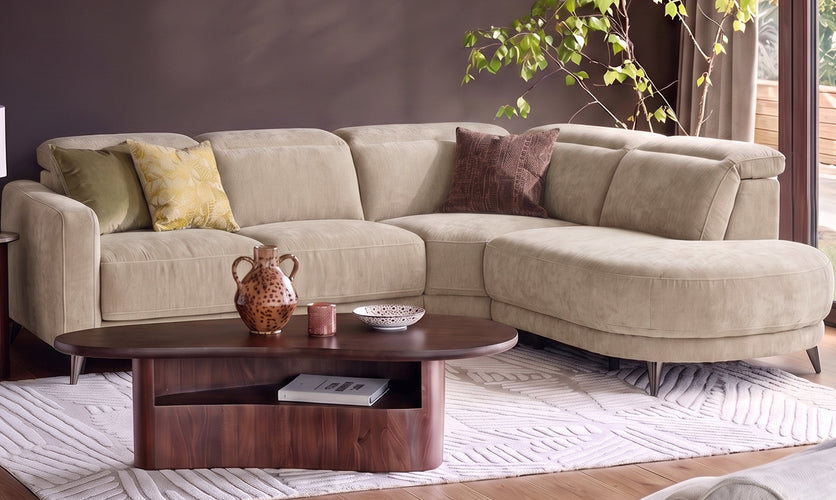
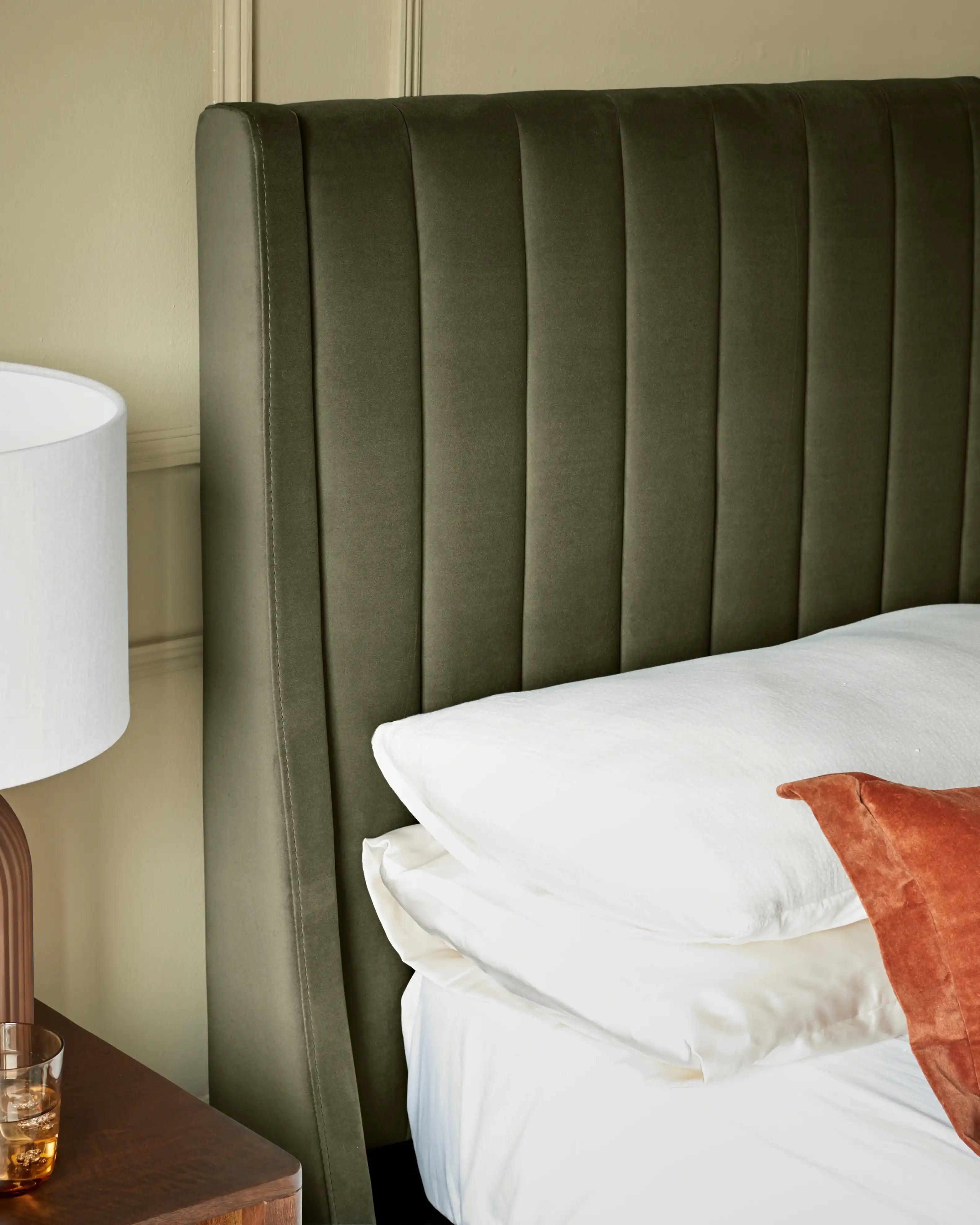
The material a sofa is upholstered can also go hand in hand with its style. Leather sofas tend to lean more traditional, like our Chesterfield-inspired Luxe Collection, with an iconic blind buttoned back and gently curling arms. They also come in simple, elegant silhouettes, like our mid-century-modern Colton Collection. On the other hand, fabric sofas have become increasingly sculptural thanks to the versatility of their upholstery, from fluted to cloud-like, like our Ottilie fabric corner sofa that is curved and cushioned like a cloud and coming in a selection of colours.
So, is a leather sofa better than a fabric one? You tell us. The only right answer is yours, and the best choice is the one that fits seamlessly into your life. By thinking carefully about where your sofa will live, who will use it, and how often it will be enjoyed, you can narrow down your options with confidence. From there, comfort, maintenance, and durability help refine your decision, making sure that your sofa isn’t just beautiful on day one, but remains a piece you love living with for years to come.