Skip to content


A bed is more than just somewhere to sleep. It's where your day begins and ends, where you unwind after busy evenings, enjoy slow weekend mornings and find the rest you need to take on the day ahead.
Choosing the right bed isn't simply about finding the right size. It's about balancing comfort, practicality and proportion with the way you live. From the overall dimensions of the bed frame to integrated storage and thoughtful features, every detail contributes to how your bedroom looks, feels and functions.
Whether you're furnishing a compact guest room or creating a spacious principal bedroom, this guide will help you choose a bed that's designed around your home and built for everyday living.
What This Guide Covers
Choosing the right bed
Bed sizes explained
Measuring your bedroom correctly
How much space to leave around your bed
Bed frame styles explained
Upholstered vs wooden beds
Ottoman and storage beds
Additional features to consider
Choosing the right mattress
Beds for different lifestyles
Common buying mistakes
Bed buying checklist
Frequently asked questions

Choosing the Right Bed
Before thinking about fabrics, colours or headboard styles, take a step back and think about how your bed will be used.
For some people, the bedroom is simply somewhere to sleep. For others, it's also a place to read, work, relax or enjoy a quiet morning coffee. The best bed is one that supports these everyday moments while fitting comfortably within your space.
Start by asking yourself:
What size bedroom do you have?
How many people will be sleeping in the bed?
Do you need additional storage?
Is the bed likely to become the focal point of the room?
What other furniture needs to fit alongside it?
Answering these questions first will make choosing the right size, style and features much easier.
Choosing the Right Bed Size
The size of your bed influences far more than how much room you have to sleep. It also affects how spacious your bedroom feels, how easily you can move around the room and how much space remains for bedside tables, wardrobes and other furniture.
Standard UK Bed Sizes
Bed Size | Mattress Size | Best For |
Single | 90 x 190cm | Children's rooms, guest bedrooms and compact spaces |
Small Double | 120 x 190cm | Solo sleepers wanting extra space |
135 x 190cm | Couples and smaller bedrooms | |
150 x 200cm | Couples wanting additional sleeping space | |
180 x 200cm | Larger bedrooms and maximum comfort |
Remember the Bed Frame
One of the biggest mistakes people make is measuring only for the mattress.
Many contemporary upholstered beds extend beyond the mattress size, with generously proportioned side rails, statement headboards or wider frames. These design details create beautiful visual impact, but they also increase the overall footprint of the bed.
Always check the complete product dimensions rather than assuming the mattress size reflects the size of the bed itself. This is especially important when choosing upholstered beds with oversized headboards or winged designs.
Measuring Your Bedroom
Accurate measurements are one of the most important parts of buying a bed.
A beautifully designed bed can quickly make a room feel cramped if there isn't enough space to move around it comfortably.
Before choosing a bed, measure your room carefully and think about how you'll use the space every day.
Consider:
Overall room dimensions
Doorways and door swings
Windows and radiators
Wardrobes and drawers
Ensuite doors
Sloping ceilings or alcoves
A simple way to visualise the space is by marking the footprint of the bed on the floor using masking tape. This helps you understand how much room the bed will occupy before making a purchase.
Leave Enough Space Around the Bed
As a guide, aim to leave approximately 60–75cm around each accessible side of the bed wherever possible.
If your room allows, 90cm provides even greater freedom of movement, particularly between the bed and wardrobes or chest of drawers.
This ensures you can:
Make the bed comfortably.
Open wardrobe doors fully.
Access bedside tables easily.
Move naturally around the room.
The bedroom should feel calm and effortless to move through, not dominated by the bed.

Planning Your Bedroom Layout
Your bed is the largest piece of furniture in the room, which means it naturally influences everything around it.
Before choosing a bed, think about how the rest of your furniture will work alongside it.
Consider:
Will bedside tables fit comfortably?
Is there enough room to open wardrobes and drawers?
Would a dressing table or chest of drawers still fit?
Is there space for a bench or accent chair at the foot of the bed?
Does the layout allow enough natural walkways?
Planning the room as a whole helps create a bedroom that feels balanced and considered, rather than simply filled with furniture.
Bed Frame Styles Explained
The style of your bed has a significant influence on both the appearance and functionality of your bedroom.
Upholstered Beds
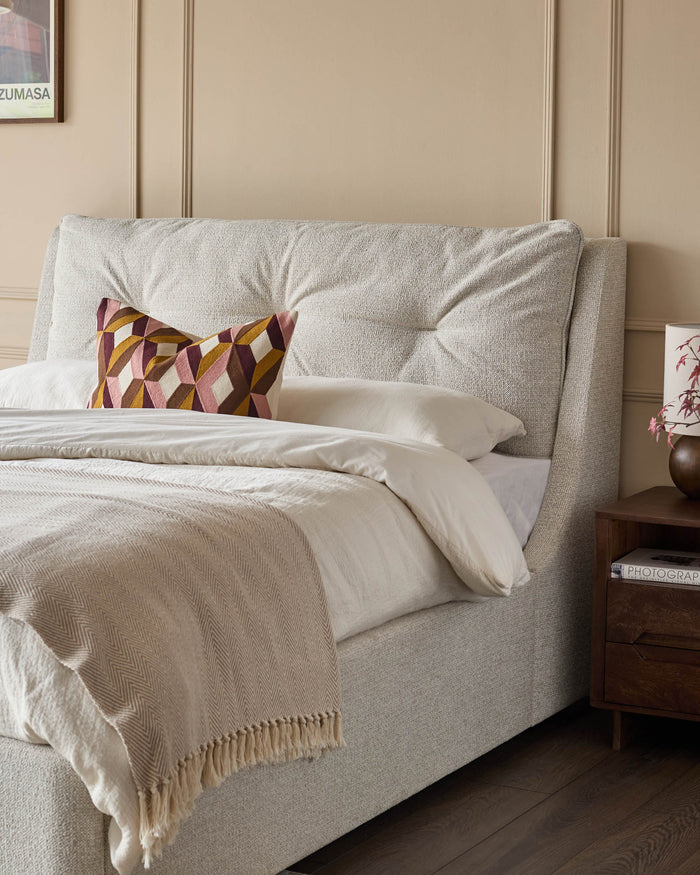
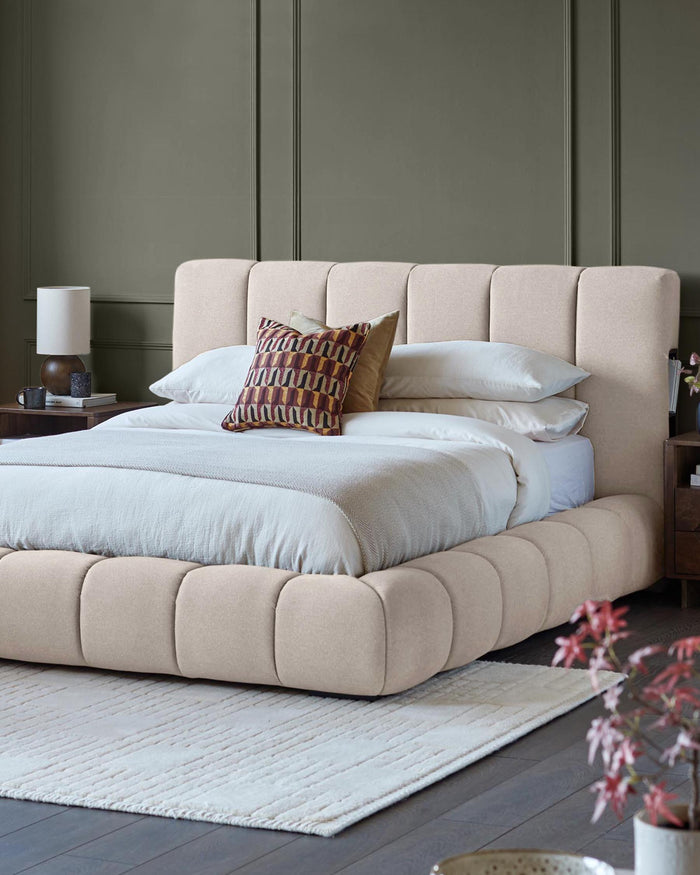
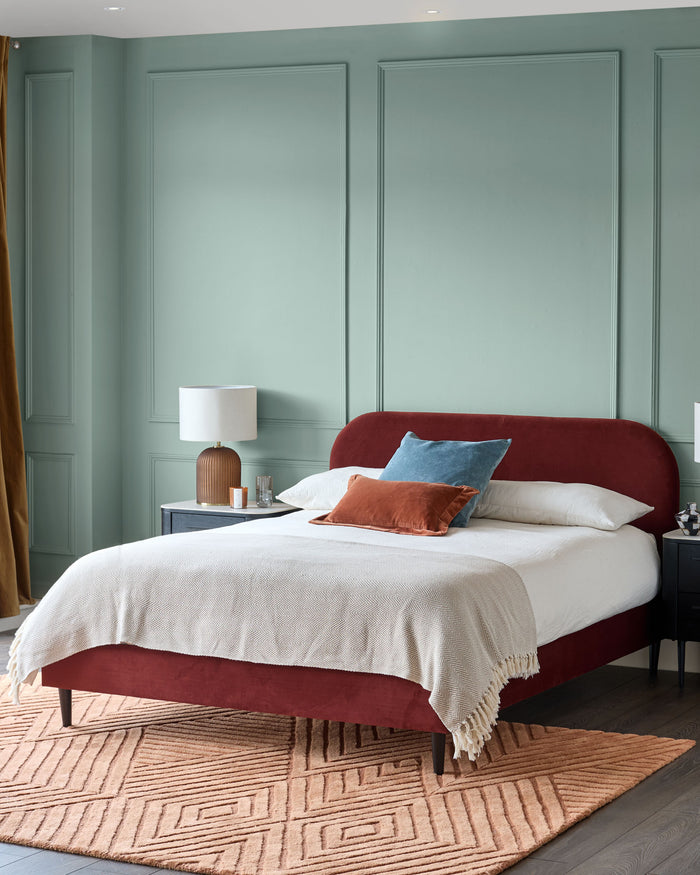
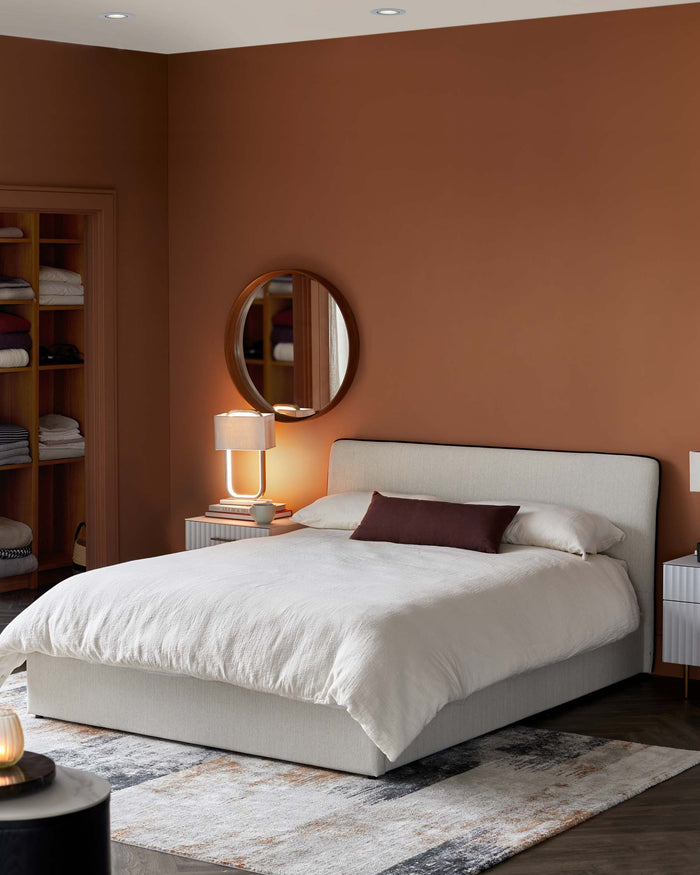
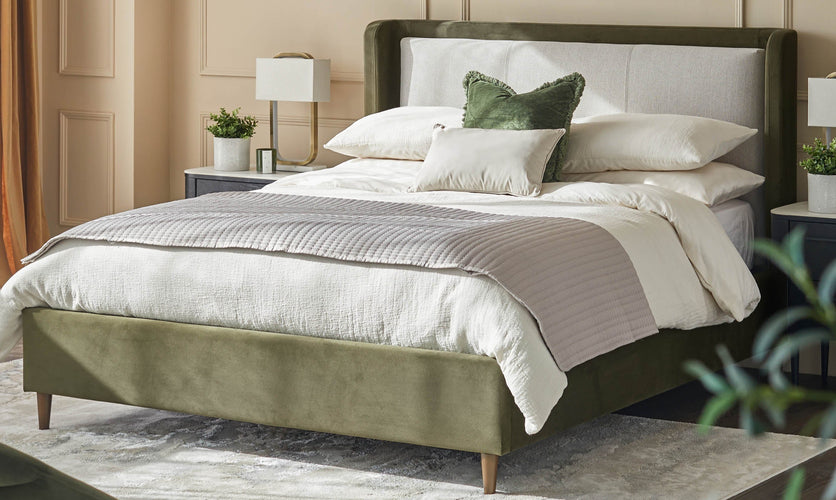
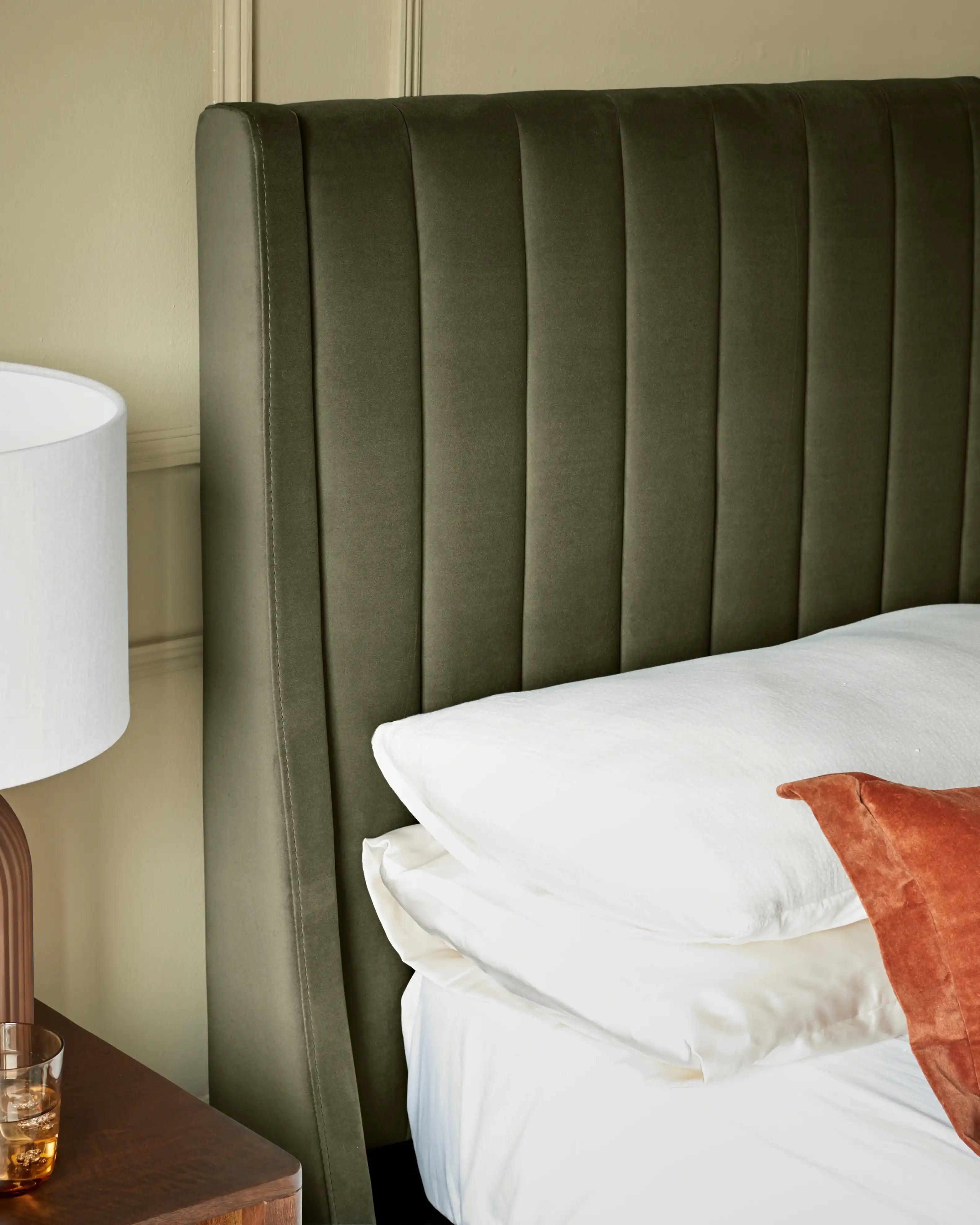
Upholstered beds bring softness, warmth and texture into a bedroom.
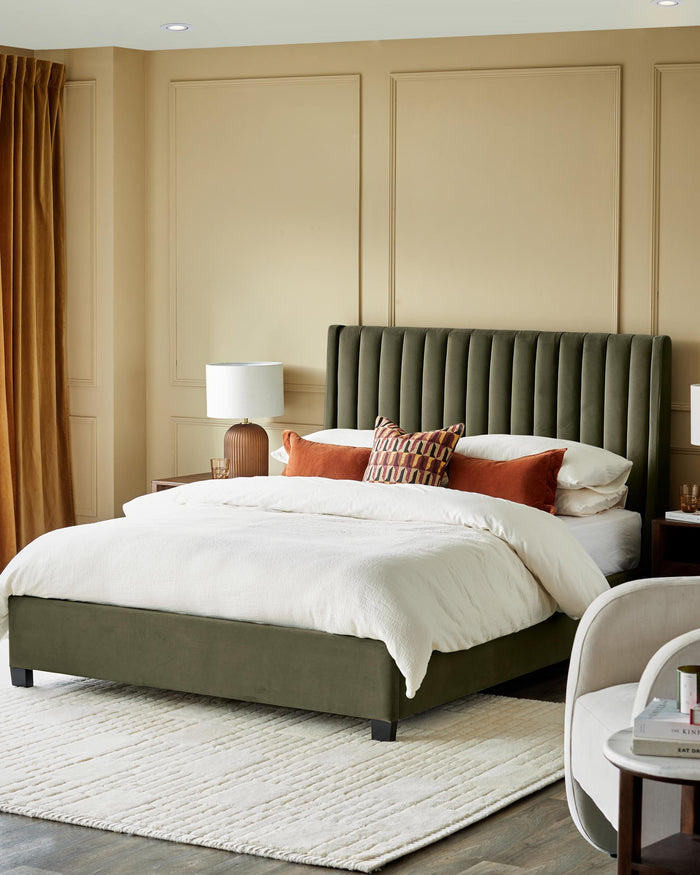
Available in velvet, chenille, boucle and woven fabrics, they create an inviting focal point while providing a comfortable surface to lean against when reading or relaxing in bed.
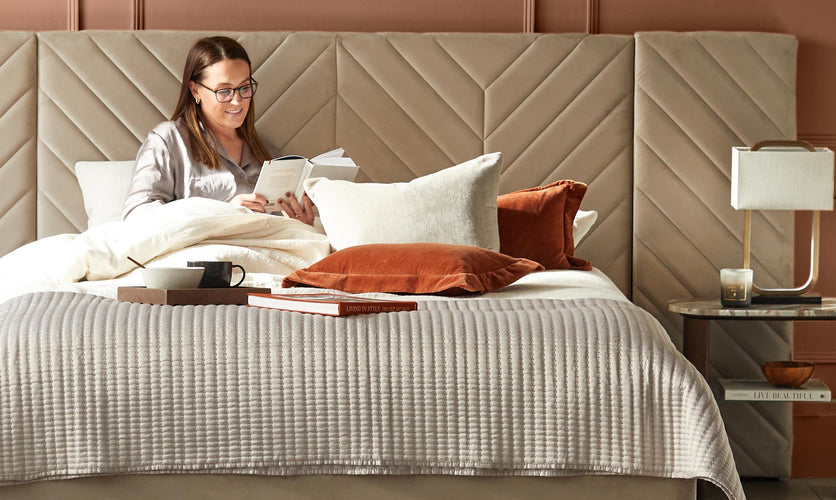
Large upholstered headboards also introduce a boutique hotel feel, adding depth and character to the room.
Contemporary Beds
Contemporary beds often feature generous proportions, sculptural silhouettes and thoughtfully integrated details.
Many designs include wider headboards or extended side rails that create a stronger visual presence within the room. While these proportions enhance the overall design, they also make accurate measuring especially important before purchasing.
Wooden Beds
Wooden beds offer timeless appeal and natural warmth.
Their clean lines work particularly well in Scandinavian, Japandi and modern organic interiors, bringing texture without overwhelming the room.

Storage Beds Explained
Under-bed storage is one of the simplest ways to maximise space without adding extra furniture.
The right storage solution depends on what you want to store and how often you need to access it.
Ottoman Beds
Ottoman beds lift using a hydraulic mechanism to reveal storage beneath the entire mattress.
They're ideal for storing:
Bedding
Seasonal clothing
Suitcases
Extra blankets
Because the entire base lifts, ottoman beds maximise storage while keeping everything neatly out of sight. Danetti's ottoman beds use hydraulic lift mechanisms to provide smooth, assisted opening for everyday practicality.
Beds Without Storage
If your bedroom already has generous wardrobe space, a standard bed frame may be the better option.
Without integrated storage, these designs often feel lighter visually and allow greater flexibility beneath the bed where appropriate.
Additional Features Worth Looking For
Today's beds do much more than provide somewhere to sleep.
Depending on your lifestyle, thoughtful integrated features can make everyday routines simpler and help your bedroom work even harder.
Consider features such as:
Integrated USB Charging
Built-in USB charging ports allow you to charge phones and devices without trailing cables across bedside tables, making them particularly useful in contemporary bedrooms. Some Danetti designs incorporate discreet USB charging within the headboard for added convenience.
Hydraulic Lift Mechanisms
Quality hydraulic systems make ottoman storage effortless to access while helping the mattress platform remain safely supported during use.
Protective Feet
Integrated floor protectors help reduce the risk of scratching hard flooring during everyday use.
Easy Assembly
It's also worth checking what's included with assembly and whether professional installation is available if preferred.
Choosing the Right Mattress
A bed frame provides the foundation, but your mattress plays an equally important role in how comfortably you sleep.
When choosing a mattress, consider:
Your preferred level of firmness
Sleeping position
Body support
Temperature regulation
Motion transfer if sharing a bed
Because choosing a mattress is a topic in its own right, we've created a dedicated Mattress Buying Guide that explores everything in more detail.
Your Bed Shapes the Rest of Your Bedroom
Your bed is often the first piece of furniture chosen for a bedroom, but it quickly influences every decision that follows.
Its width determines how much room remains for bedside tables. Its headboard influences lighting choices and artwork. Its overall footprint affects wardrobe placement, rugs and circulation throughout the room.
Thinking about your bedroom as a complete composition, rather than a collection of individual purchases, helps create a space that feels balanced, cohesive and designed around the way you live.

Beds for Different Ways of Living
Smaller Bedrooms
Look for ottoman storage beds that maximise hidden storage while reducing the need for additional furniture elsewhere in the room.
Main Bedrooms
A king or super king bed with a generously upholstered headboard creates a luxurious focal point while delivering everyday comfort.
Guest Bedrooms
Double beds offer an excellent balance between comfort and space efficiency, making them ideal for occasional overnight guests.
Busy Homes
Integrated storage, durable upholstery and thoughtful features such as USB charging help your bedroom work harder without compromising on style.
Common Bed Buying Mistakes
Avoid these common mistakes:
Measuring only for the mattress rather than the bed frame.
Forgetting to allow space for bedside tables.
Not considering wardrobe doors or drawers.
Ignoring storage access for ottoman beds.
Choosing a bed that's too large for the room.
Prioritising appearance over practicality.
Taking time to measure your room properly will help ensure your bed continues to feel comfortable long after delivery.
Bed Buying Checklist
Before placing your order, ask yourself:
✔ Have I measured my bedroom?
✔ Have I checked the overall bed frame dimensions?
✔ Is there enough space to move comfortably around the bed?
✔ Have I considered bedside tables and other furniture?
✔ Do I need integrated storage?
✔ Would additional features such as USB charging benefit my everyday routine?
✔ Have I chosen the right mattress size?
✔ Will this bed continue to suit my lifestyle in years to come?
Frequently Asked Questions
What size bed should I buy?
The right size depends on your room dimensions, how many people will be sleeping in the bed and how much surrounding furniture needs to fit comfortably within the space.
How much space should you leave around a bed?
Aim to leave around 60–75cm around accessible sides of the bed where possible, increasing this to around 90cm if space allows for easier movement.
Are ottoman beds worth it?
Yes. Ottoman beds provide substantial hidden storage while maintaining a clean, uncluttered bedroom, making them particularly useful in smaller homes.
Are upholstered beds practical?
Absolutely. Modern upholstery fabrics are designed for everyday living and provide both comfort and visual warmth within the bedroom.
Can you use any mattress with an ottoman bed?
Most ottoman beds are designed to work with standard mattresses, although it's always worth checking the manufacturer's recommendations before purchasing.
What is the difference between mattress size and bed size?
Mattress dimensions refer to the sleeping surface, while overall bed dimensions include the frame, headboard and side rails. Contemporary upholstered beds are often noticeably larger than the mattress they accommodate.
Final Thoughts
Choosing the right bed is about more than finding somewhere to sleep. It's about creating a bedroom that supports the way you live, balances comfort with practicality and feels beautifully considered from every angle.
By taking the time to measure your room carefully, choosing a size that suits your space and considering features such as integrated storage and USB charging, you'll invest in a bed that continues to work effortlessly for years to come.
Because the best beds don't simply complete a bedroom - they help shape how you experience it, every single day.