Skip to content


A dining bench is one of the simplest ways to transform your dining space. It offers flexible seating, creates a relaxed, contemporary feel and can often accommodate more people than individual dining chairs.
But choosing the right dining bench involves more than finding a style you like. The best bench for your home depends on your dining table, the size of your room, how many people you want to seat and how you use your dining space every day.
Whether you're furnishing a compact kitchen diner or a spacious open-plan dining room, this guide will help you choose a dining bench that feels comfortable, looks considered and works beautifully with your home.
What This Guide Covers
Choosing the right dining bench
Dining bench measurements explained
How long should a dining bench be?
How many people can a dining bench seat?
Dining bench styles explained
Dining bench vs dining chairs
Choosing the right upholstery
Choosing the right colour
Comfort features worth considering
Dining benches for different lifestyles
Common buying mistakes
Dining bench buying checklist
FAQs
Choosing the Right Dining Bench
Before looking at sizes or upholstery, think about how your dining bench will be used.
A bench in a busy family kitchen will have different priorities to one used mainly for entertaining. Likewise, the best choice for a compact apartment may be very different from one for a large open-plan dining space.
Start by considering:
The size and shape of your dining table
How many people you'd like to seat regularly
The amount of space available around your table
Whether comfort or space-saving is your priority
The overall look you want to achieve
Once you've answered these questions, narrowing down the right size, style and material becomes much easier.

Dining Bench Measurements Explained
Getting the measurements right is one of the most important parts of choosing a dining bench.
Dining Bench Length
One of the most common questions is: How long should a dining bench be?
As a general rule, your dining bench should be slightly shorter than your dining table—typically by around 20–30cm overall (10–15cm at each end).
This allows the bench to sit neatly beneath the table while creating a balanced appearance.
For pedestal tables, where there are no corner legs to consider, you can often choose a slightly longer bench.
Dining Bench Width and Depth
Most dining benches are between 35–45cm deep, providing comfortable seating without taking up unnecessary floor space.
A deeper bench offers a more generous, relaxed feel and works well if your dining space is used for long meals or entertaining. Slimmer benches are ideal for compact kitchen diners, helping the room feel more open while still providing comfortable seating.
Dining Bench Height
Dining bench seat heights generally sit between 45–50cm, making them suitable for standard dining tables measuring around 72–76cm high.
Aim to leave approximately 25–30cm between the seat and the underside of the table. This provides comfortable legroom while allowing everyone to dine naturally.
Leg Clearance Beneath the Table
It's not just about whether the bench fits beneath the table - there also needs to be enough room for people to sit comfortably.
When seated, your knees should move freely beneath the tabletop without touching the underside or table frame.
If your dining table has a deep apron or support frame beneath the top, make sure to factor this into your measurements. Pedestal dining tables often provide greater leg clearance, making them particularly well suited to dining benches.
Space Around the Bench
Remember to leave enough room behind your dining bench for people to sit down and move comfortably.
As a guide, allow around 90cm between the edge of the bench and the nearest wall or furniture where possible.
This creates a more comfortable flow through the room and makes everyday dining much easier.

How Many People Can a Dining Bench Seat?
Dining benches are a great way to maximise seating because they allow for more flexibility than individual dining chairs.
As a guide, allow around 60cm of seating space per person.
Bench Length | Seats |
120cm | 2 |
140cm | 2–3 |
160cm | 3 |
180cm | 3–4 |
200cm | 4 |
The exact number will depend on the width of each person and whether the bench has arms or a backrest.
If you're planning to entertain regularly, a dining bench also gives you the flexibility to comfortably squeeze in an extra guest when needed.
Dining Bench Styles Explained
Different dining bench styles suit different homes and lifestyles.
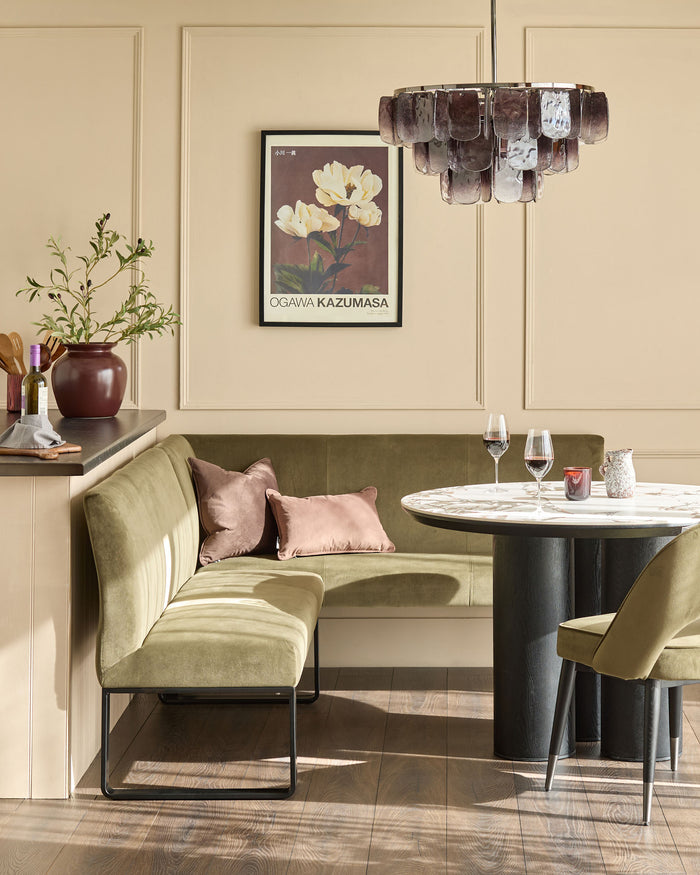
Full-Length Dining Benches
Ideal for maximising seating while creating a clean, contemporary look.
Perfect for larger dining tables and open-plan spaces.
A great choice for creating a sociable dining nook or making the most of awkward corners.
They maximise seating while helping define open-plan spaces.
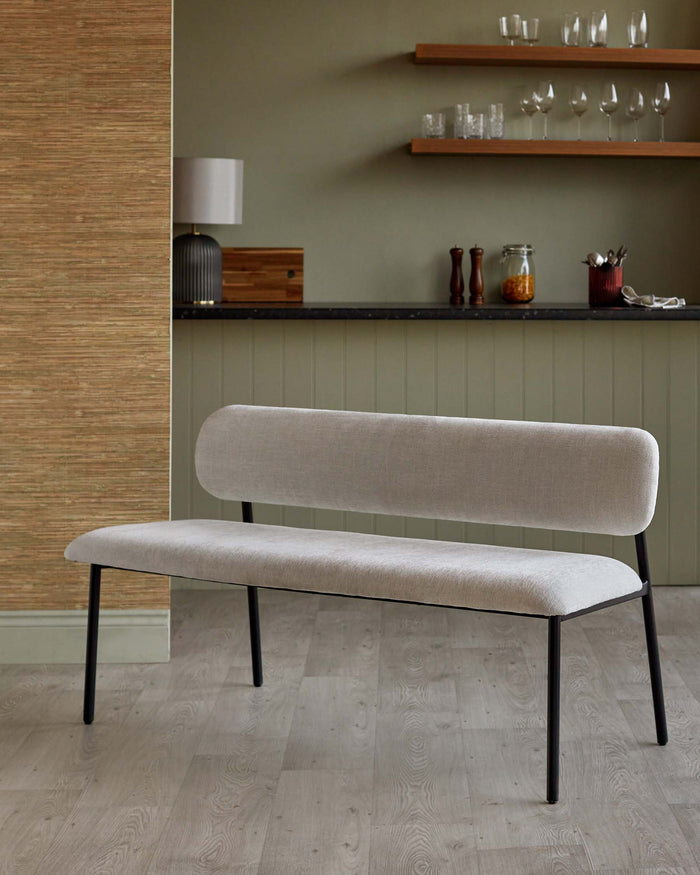
Dining Benches with a Back
Dining benches with a backrest provide additional comfort and support, making them ideal for longer meals and regular entertaining.
They also create more of a visual statement within the room.
Backless Dining Benches
Backless benches create a lighter, more open feel and can usually be tucked neatly beneath the table when not in use.
They're an excellent choice for compact dining spaces.

Dining Bench vs Dining Chairs
Not sure whether a dining bench or dining chairs are the right choice?
Both have their advantages.
Dining Bench | Dining Chairs |
Seats more people flexibly | Individual seating |
Creates a relaxed, contemporary feel | Easier to get in and out |
Can tuck beneath the table | More personal comfort |
Ideal for maximising space | Greater flexibility around different table shapes |
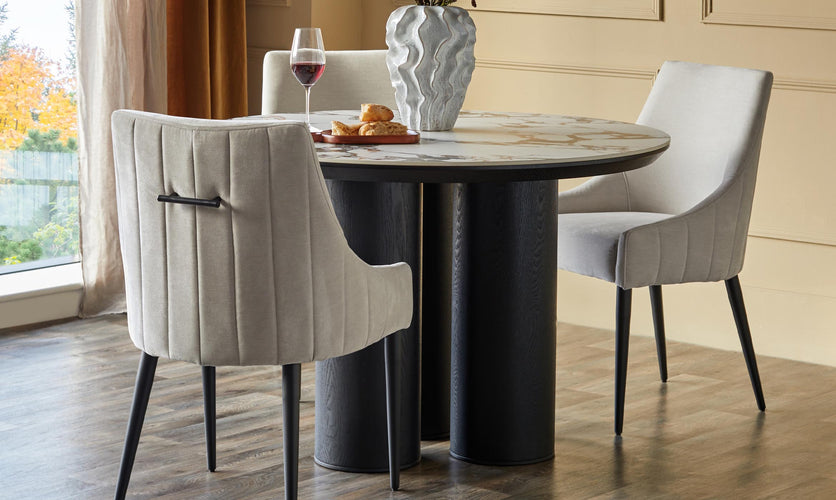
For many homes, combining the two creates the best result. Pairing a dining bench on one side of the table with dining chairs on the other delivers a balanced, modern look while offering the flexibility of both seating styles.
Choosing the Right Upholstery
The material you choose influences both comfort and practicality.
Material | Best For | Benefits |
Statement dining spaces | Soft, luxurious and rich in texture | |
Fabric | Relaxed everyday dining | Comfortable, warm and inviting |
Real Leather | Frequent use | Durable, easy to maintain and develops character |
Busy family homes | Practical, low maintenance and easy to wipe clean |
Choose a material that suits the way you live rather than simply the look you're trying to achieve.
Choosing the Right Colour
A dining bench doesn't have to match your dining table exactly.
Instead, use colour to create balance throughout the room.
You might:
Coordinate your bench with upholstered dining chairs.
Repeat black or brushed metal finishes through lighting or table legs.
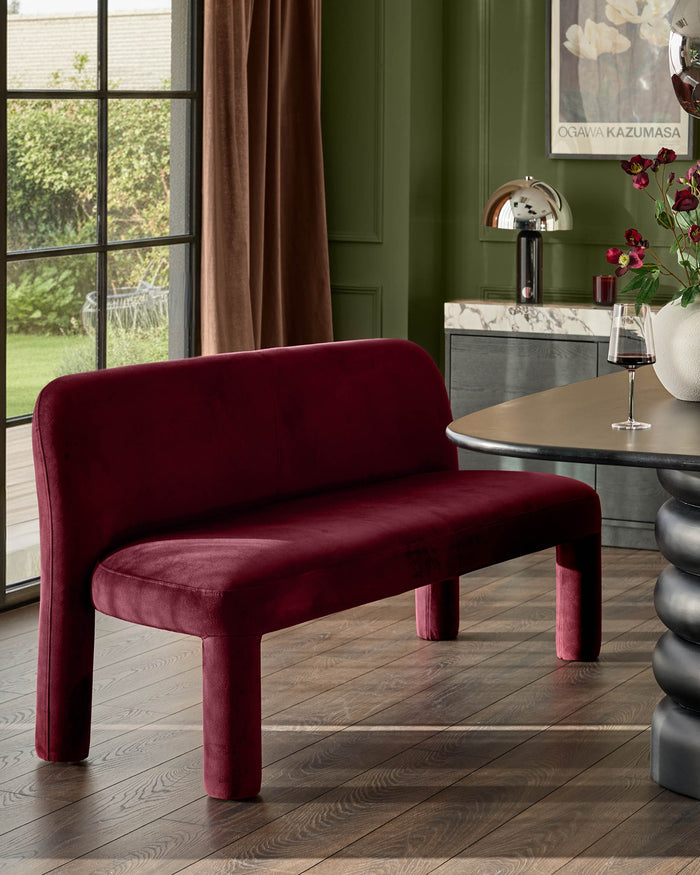
Introduce colour through upholstery while keeping the table neutral.
Echo warm timber tones elsewhere in the room.
Repeating colours and materials in subtle ways helps create a dining space that feels cohesive without appearing overly matched.
Comfort Features Worth Considering
The smallest details often have the biggest impact on everyday comfort.
Look out for:
Supportive upholstered seats
Comfortable backrests
Durable, easy-care fabrics
Generous seat depth
Strong frame construction
Floor protectors
These features help ensure your dining bench remains comfortable and practical for years to come.

Dining Benches for Different Ways of Living
For Busy Family Homes
Choose practical upholstery such as faux leather or durable fabrics that are easy to clean and designed to cope with everyday use.
For Entertaining
Longer benches or corner benches create a relaxed, sociable atmosphere and allow you to accommodate additional guests with ease.
For Smaller Dining Spaces
Backless benches that tuck neatly beneath the table help maximise floor space while maintaining a clean, uncluttered appearance.
For Open-Plan Living
Pair a dining bench with upholstered dining chairs to create a layered, contemporary look that connects naturally with the rest of your home.
Common Dining Bench Buying Mistakes
Avoid:
Choosing a bench that's too long for your table.
Forgetting to measure between table legs.
Ignoring seat height and leg clearance.
Not allowing enough room behind the bench.
Prioritising style over comfort.
Choosing upholstery that doesn't suit your lifestyle.
Taking the time to measure carefully will help ensure your bench feels comfortable from the very first meal.
Dining Bench Buying Checklist
Before placing your order, ask yourself:
✔ Have I measured my dining table?
✔ Is the bench the correct length?
✔ Will it fit comfortably beneath the table?
✔ Is there enough legroom?
✔ Have I left enough space behind the bench?
✔ Does the upholstery suit my lifestyle?
✔ Does it complement the rest of my dining space?
Frequently Asked Questions
How long should a dining bench be?
A dining bench should generally be around 20–30cm shorter than the dining table to allow comfortable seating and a balanced appearance.
What height should a dining bench be?
Most dining benches have a seat height of between 45–50cm, making them suitable for standard dining tables.
Can a dining bench fit under the table?
Yes. Choosing a bench slightly shorter than the inside leg measurement of your table allows it to tuck neatly underneath when not in use.
Can you mix a dining bench with dining chairs?
Absolutely. Combining a bench with dining chairs creates a more relaxed, contemporary look while offering greater flexibility.
Are dining benches comfortable for everyday use?
Yes. Upholstered benches with supportive seats and backrests are designed to provide comfort for everyday dining as well as entertaining.
Final Thoughts
A dining bench brings people together in a way that feels relaxed, welcoming and effortlessly contemporary.
By choosing the right size, considering how it works with your dining table, and selecting materials that suit your lifestyle, you'll create seating that's both practical and beautifully considered.
Whether paired with matching dining chairs or used on its own, the right dining bench doesn't just maximise seating - it helps shape the way you gather, dine and spend time together every day.